


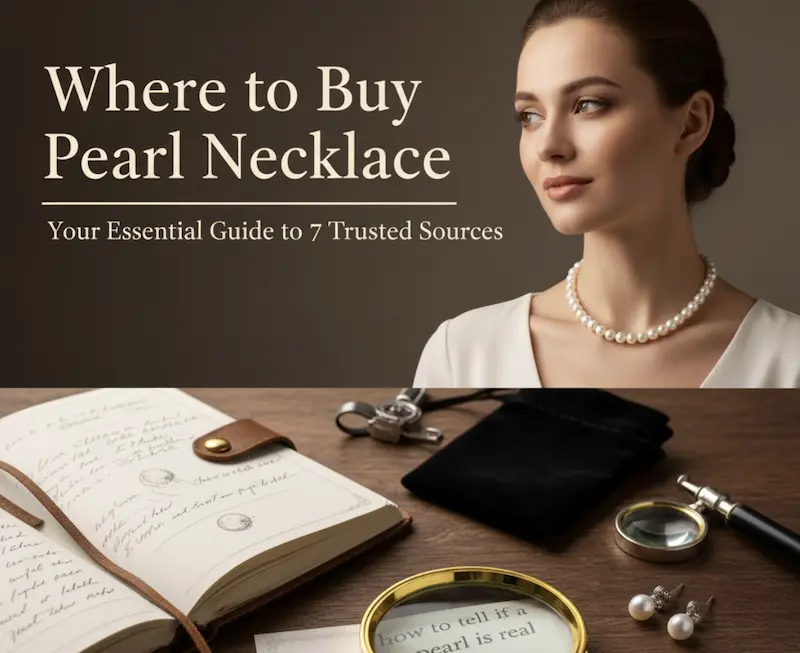
Pearls have held a place in the jewelry world for centuries, yet finding genuine ones today is trickier than it sounds. With countless sellers competing both online and on the high street, knowing where to buy real pearl necklace pieces that actually justify their price tag has become a skill in itself.
Consider this your roadmap. In the pages ahead we cover where genuine pearls can be sourced, the ways you can confirm a pearl is real, and a few trade insights that take the guesswork out of buying. Whether the necklace is a treat for yourself or a gift meant to last, understanding how the pearl market works is the foundation of a purchase you won't regret.
What Actually Makes a Pearl “Real”
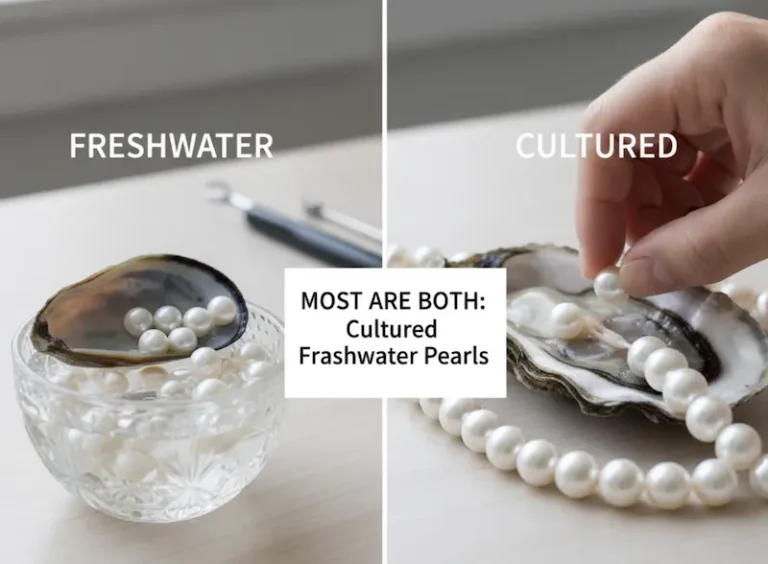
Let's clear this up before anything else, because it matters enormously when deciding where to buy real pearl necklace jewelry. A “real” pearl is one produced by a mollusk, whether entirely by chance or with a nudge from human hands. Truly wild, natural pearls do form on their own, but they're extraordinarily scarce. The overwhelming majority sold today are cultured, meaning a pearl farmer introduces an irritant into the mollusk to trigger the pearl-making process.
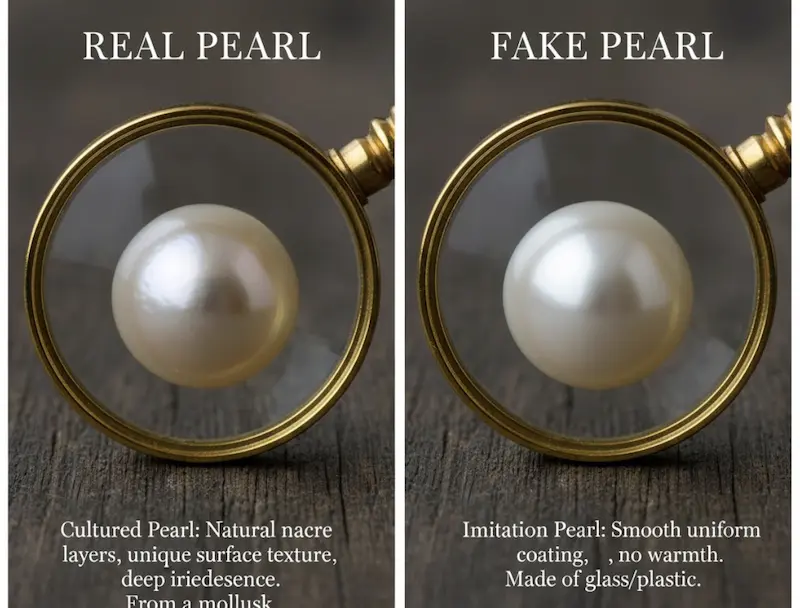
Here's the key point: a cultured pearl is every bit as real as a wild one. That signature soft luminance comes from nacre, the iridescent substance the mollusk secretes in successive layers over time. Depending on the pearl variety, building up that coating can take anywhere from around six months to several years.
Imitation pearls, by contrast, are typically glass, plastic, or ground shell finished with a coating meant to mimic the real thing. What they lack is the depth, the living glow, and the subtle character that only genuine pearls possess—something worth keeping front of mind as you weigh where to buy real pearl necklace jewelry.
Four Main Types of Real Pearls
Pearls vary according to where they're grown and which mollusk produces them, and each family carries its own distinct character and appearance:
- Freshwater Pearls – Cultivated largely on pearl farms in China, these are typically the friendliest on the wallet. Freshwater pearls deliver strong value and arrive in a wide spectrum of shapes and hues. For a first pearl purchase, or simply for something lovely that won't drain your savings, they're an excellent starting point.
- Akoya Pearls – Cultivated chiefly in Japan and China, Akoya pearls are the crisp, round, white pearls most people picture when they imagine classic pearl jewelry. They commonly measure around 6-8mm and are prized for their especially brilliant shine.
- South Sea Pearls – In spite of the name, the bulk of them originate in French Polynesia. They're celebrated for their deep, dramatic tones—grays, blacks, greens, and peacock shades.
- Tahitian Pearls – The name notwithstanding, most Tahitian pearls actually come from French Polynesia as well. They're renowned for their striking, dark palette—grays, blacks, greens, and those iridescent multi-toned “peacock” colors.
Top 7 Places Where to Buy Real Pearl Necklace Jewelry
Buying pearls rewards a little homework. What you're after are trustworthy sellers who genuinely back what they sell. With that in mind, let's walk through the strongest options on the market today.
1. Online Pearl Specialists
As mentioned, a bit of research pays off before you commit. You want sellers who inspire confidence and stand firmly behind their goods. So let's take a closer look at the leading choices right now for where to buy real pearl necklace jewelry.
Online pearl retailers have genuinely changed the game. Their leaner overheads often translate into keener prices for the buyer, and you'll usually find a far wider selection along with richer detail on every pearl. Many also bundle in certifications, sharp photography, and painless returns, all of which take much of the risk out of buying over the internet.
As you weigh where to buy real pearl necklace jewelry on the web, keep an eye out for the following:
- Detailed grading information covering luster, surface quality, shape, and size
- High-resolution photographs of the actual item
- Certification or authentication paperwork
- Transparent return terms, commonly in the 30 to 60 day range
- Guidance on caring for pearls and gauging their quality
2. Direct Pearl Manufacturers
Going straight to a Pearl Manufacturer can be an even smarter move. These outfits mostly supply pearls to the trade at wholesale rates, though a number of them will also sell directly to individuals who want top-tier pearls without the customary retail mark-up.
Buying at the source means every middleman who would normally tack on a margin is removed from the equation. The upshot is a noticeably finer pearl for less than you'd typically pay. Many manufacturers, which rank among the best places for where to buy real pearl necklace jewelry, now run polished websites packed with the details you need and ship straight to your address.
3. Luxury Jewelry Brands
Established houses such as Tiffany & Co., Mikimoto, and Cartier occupy the premium tier for anyone considering where to buy real pearl necklace jewelry. They deliver flawless quality, prestige packaging, and the reassurance of a name everyone recognizes. Their standout perk is that you get to see and handle the pearls in person before you commit—and for plenty of buyers, that hands-on moment counts for a lot.
Just be prepared to pay for it. Physical stores shoulder heavy costs—rent, staff wages, and keeping shelves stocked—and every one of those expenses is baked into the ticket price. According to the Gemological Institute of America, a pearl necklace on a showroom floor can retail for roughly two to four times what the store originally paid for it.
4. Independent Local Jewelers
Don't overlook the jeweler down the street. Smaller independent shops frequently combine deep expertise with genuinely personal service, which makes them a fine answer to where to buy real pearl necklace jewelry. They can guide your clasp choice, adjust a necklace's length, or even craft a one-off design for you. Building a rapport with a jeweler you trust also pays dividends later, whenever you need cleaning, repairs, or any other future jewelry help.
5. Auction Houses
For vintage or antique pearl necklaces, keep an eye on auction houses like Christie's and Sotheby's. Every so often they surface remarkable, singular pearls with documented provenance, offering a distinctive route for where to buy real pearl necklace jewelry. Estate sales, too, can turn up quiet treasures. Tread carefully, though—judging condition, confirming authenticity, and landing on a fair value all demand real know-how.
Above all, secure some form of proof that the pearls are genuine before you raise your paddle. Reputable auction houses will supply a certificate of authenticity for their higher-end lots.
6. Department Store Jewelry Counters
Major retailers like Bloomingdale's, Neiman Marcus, and Nordstrom are always worth a browse. The appeal is that they carry pearl jewelry spanning many different brands, which gives you yet another answer to where to buy real pearl necklace jewelry. They also tend to have generous return policies and run frequent promotions. Their range may not rival a dedicated pearl specialist, but they're a solid pick when you want something handsome without an exhaustive search.
7. Certified Gemological Retailers
Certain jewelers keep gem specialists on staff—known as Graduate Gemologists—or partner with independent gem labs. They'll hand you a professional grading report alongside your purchase, an extra layer of certainty about exactly what you're buying when you're mulling where to buy real pearl necklace jewelry. Seek out credentials from respected authorities such as the GIA or AGS.
How to Confirm Authenticity Before You Buy
Pinning down where to buy real pearl necklace jewelry is only half the battle. You still have to verify what actually lands in your hands. Here are some hands-on tests you can perform:
Price Ranges: What to Expect
Getting a feel for pricing helps you recognize a genuine bargain and sidestep a con. Here's a grounded overview:
| Pearl Type | Quality Level | Typical Price Range |
|---|---|---|
| Freshwater | Good | $50 – $300 |
| Freshwater | Excellent | $300 – $1,500 |
| Akoya | Good | $300 – $1,000 |
| Akoya | Excellent | $1,000 – $10,000 |
| South Sea | Good | $1,000 – $5,000 |
| South Sea | Excellent | $5,000 – $100,000+ |
| Tahitian | Good | $500 – $2,000 |
| Tahitian | Excellent | $2,000 – $30,000+ |
These figures assume standard 16-18 inch necklaces fitted with quality clasps. Actual prices shift with size, luster, surface quality, and how well the pearls are matched.
See South Sea pearls advertised at $200? Walk away. That's either an outright scam or deeply inferior stock. The same logic applies across the board—when a price looks too good to be true, it almost always is.
Critical Factors That Shape Quality and Value
Grasping what separates a great pearl from an ordinary one is essential as you work out where to buy real pearl necklace jewelry. These are the seven attributes experts typically weigh:
- Luster – The single most important quality. Top pearls reflect light so vividly they almost act like a mirror, throwing back bright, sharp reflections. A pearl that reads dull or chalky is simply falling short on luster.
- Surface Quality – The more blemishes a pearl carries, the lower its value. Favor pearls that look smooth and clean, with minimal spotting, bumps, or irregularities. Bear in mind that nature makes these gems, so even the finest examples may show tiny imperfections.
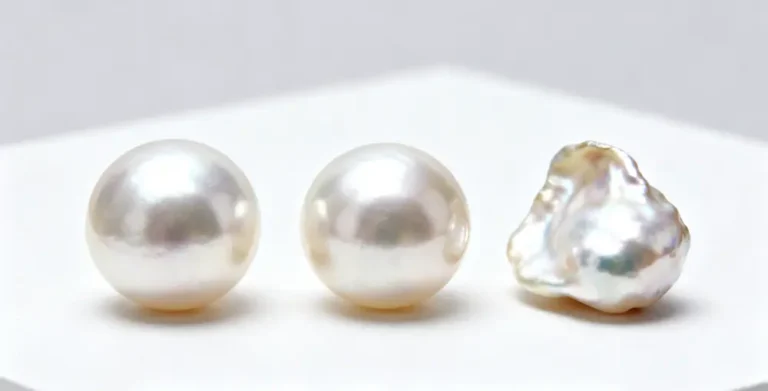
- Shape – Perfectly round pearls usually command the highest prices. Baroque pearls, with their one-of-a-kind irregular forms, can be beautiful in their own right and generally cost far less. Semi-round, teardrop, and button shapes tend to sit somewhere in the middle on price.
- Size – Bigger typically means pricier. That said, a smaller pearl with outstanding luster will always outshine a larger one whose luster is poor.
- Color – This one comes down to taste. White and cream pearls read as timeless and classic, while black, pink, gold, and multicolored pearls deliver a more distinctive look. Just remember that pearls with naturally occurring color usually carry a higher price than those that have been dyed.
- Nacre Thickness – The thicker a pearl's nacre coating, the more durable and luminous it will be. Quality Akoya pearls should carry a nacre thickness of at least 0.4mm. Freshwater pearls are intriguing here, being solid nacre right through, which is exactly why they prove so hardy and enduring despite their gentler price.
- Matching – With necklaces, price hinges heavily on how uniformly the pearls align in size, color, shape, and luster. A strand of flawlessly matched pearls will run higher than one where the pearls step gradually up in size.
Questions Worth Asking Before You Buy
Ask away—there's no such thing as too many questions. Honest sellers welcome them. Here's what to raise as you settle on where to buy real pearl necklace jewelry:
- Are these natural or cultured pearls? (Cultured is perfectly fine—they're still real.)
- What type of pearl is this, and where does it come from?
- How thick is the nacre?
- Can you share the grading report?
- What does your return policy look like?
- Do you provide certification or authentication?
- What kind of clasp comes with it—gold, silver, or platinum?
- How should I look after these pearls?
Any seller who dodges or can't handle these questions should give you pause. Professional pearl dealers offer information openly, precisely because they take pride in what they sell.
Warning Signs to Keep an Eye On
For the record, the pearl trade has its share of scams, just like any other market. Stay alert to these warning signs, particularly as you sort through the many options for where to buy real pearl necklace jewelry:
- Prices sitting well below what the market would reasonably support
- No returns, or an unusually tight window of under 14 days
- Product descriptions that are vague or simply absent
- No detail on the pearl's origin or its type
- High-pressure tactics such as “This deal ends today!”
- No reachable customer service or support channel
- Anyone pitching pearls as “investment grade”—pearls are jewelry, not an investment vehicle
- Far-fetched claims about how rare or valuable a piece supposedly is
Ultimately, trust your instincts. If something feels off, it usually is—so take your business elsewhere. You can find the Federal Trade Commission (FTC) at ftc.gov, where there's helpful guidance on protecting yourself when buying jewelry.
Reaching Your Buying Decision
Buying pearl jewelry ought to feel like a pleasure rather than a chore. Give yourself room to breathe: weigh your choices side by side, dig into customer feedback, and never hesitate to raise questions before you commit.
Remember that the right source for a genuine pearl necklace really comes down to your own priorities. A shopper watching every dollar may prefer ordering straight from growers online, where the savings are real. Someone who values seeing and touching the strand first, on the other hand, may happily walk into a brick-and-mortar jeweler and accept a slightly higher price for that experience.
If pearls are new territory for you, a good entry point is freshwater pearls. The quality is impressive and the prices stay within easy reach. Once your eye sharpens and your knowledge grows, you can graduate to more prestigious types such as Akoya or South Sea.
What matters more than anything else? Purchase from a seller you genuinely trust. Dependable sellers guide you, stay open about what they offer, and stand behind you from first inquiry to final purchase. Their goal is for you to treasure your pearls for many years.
No matter whether you order online, visit a neighborhood jeweler, or buy straight from the pearl manufacturer, genuine pearls never lose their timeless appeal. Each strand is a lovely object that ties us back to nature, to long tradition, and to an elegance that refuses to date.
FAQs
How much is a real pearl necklace worth?
Genuine pearl necklace: roughly $100 to $100k+, depending on type, size, and luster.
How do I know if a pearl necklace is real?
Glide it across your teeth: a gritty drag signals real, a smooth slide points to fake.
Are Costco pearls real?
Yes, Costco's pearls are authentic and graded, arriving with a GIA/IGA report.
What is the best brand of pearl necklaces?
Leading names include Mikimoto, Tiffany, and Tasaki.
Conclusion
Tracking down the ideal shop for a genuine pearl necklace does ask for a bit of legwork, but the payoff makes it worthwhile. Once you grasp the various pearl types, recognize what separates fine quality from the rest, understand pricing, and can spot a real pearl from an imitation, you can settle on where to buy a real pearl necklace with real confidence.
Whatever your budget or personal style, the pearl market holds an option for you. Choices run the full range, from wallet-friendly freshwater strands to lavish South Sea showpieces. For the savvy buyer, real pearls remain very much attainable.
Begin by browsing respected online pearl authorities or a local jeweler you already trust. Confirm the pearls are authentic using the tests described earlier. Ask plenty of questions about their origin, their grade, and the care they require. Above all, choose pearls whose appearance genuinely delights you.
In all likelihood your pearl necklace will turn into a treasured heirloom, handed down across generations. That is exactly why the seller and the quality carry so much weight when you decide where to buy a real pearl necklace. Move at your own pace, trust the journey, and savor the pleasure of adding these graceful, enduring gems to your collection.