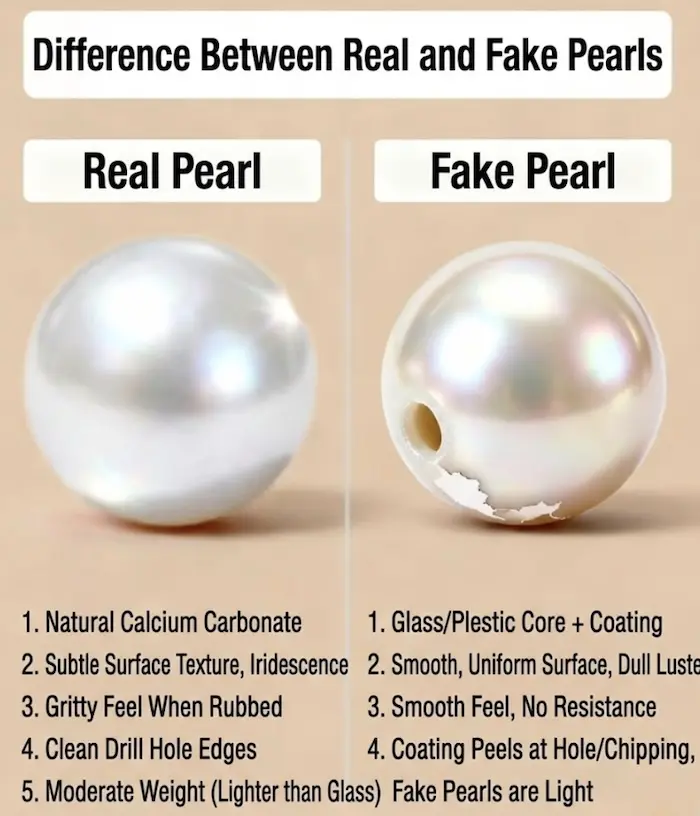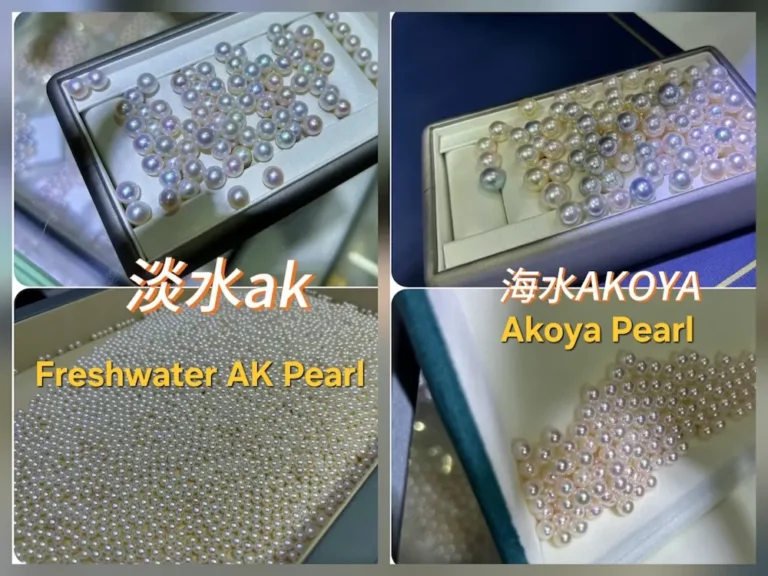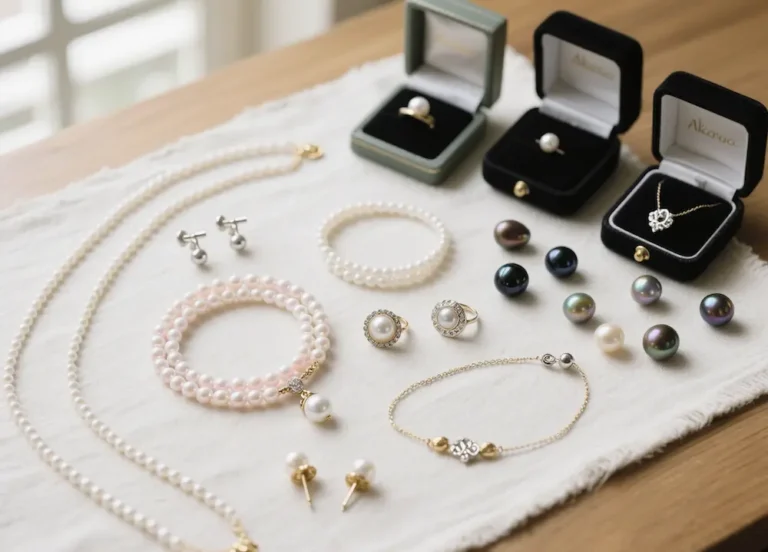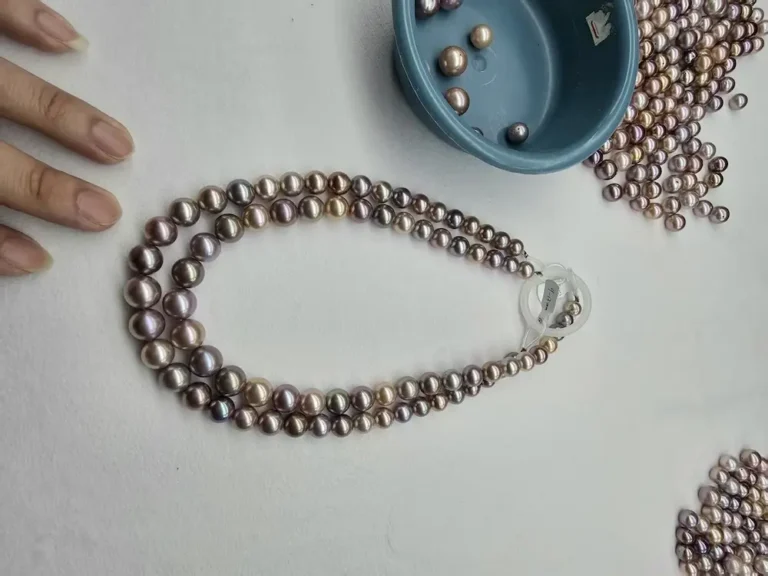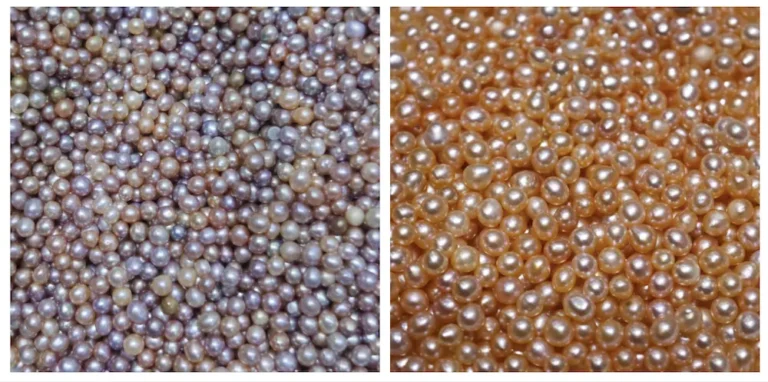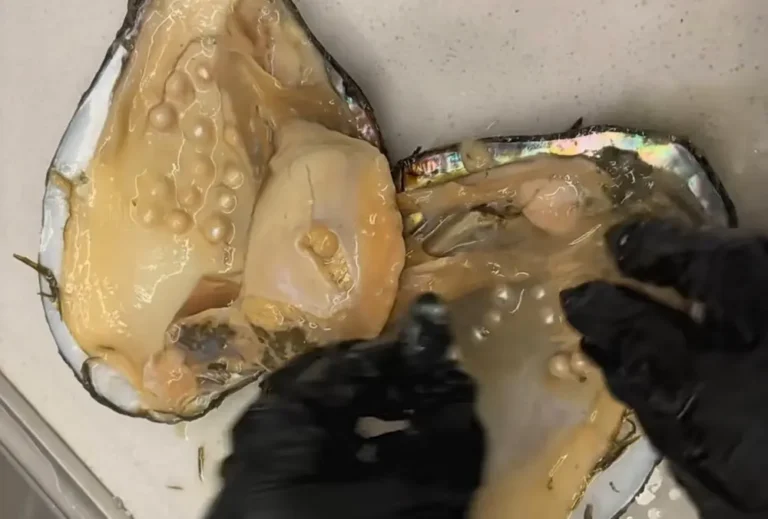





Pick up a lustrous pearl sometime and let your mind wander to its origins. What are pearls actually made of, and how do they take shape inside a living creature? The story runs deeper than most people expect. At the heart of every pearl sits nacre, a glossy material built almost entirely from aragonite, a form of calcium carbonate, together with a protein called conchiolin. Countless microscopic sheets of this substance stack up to form the gem, and it is the very same coating that lines the glimmering interior of an oyster's shell.
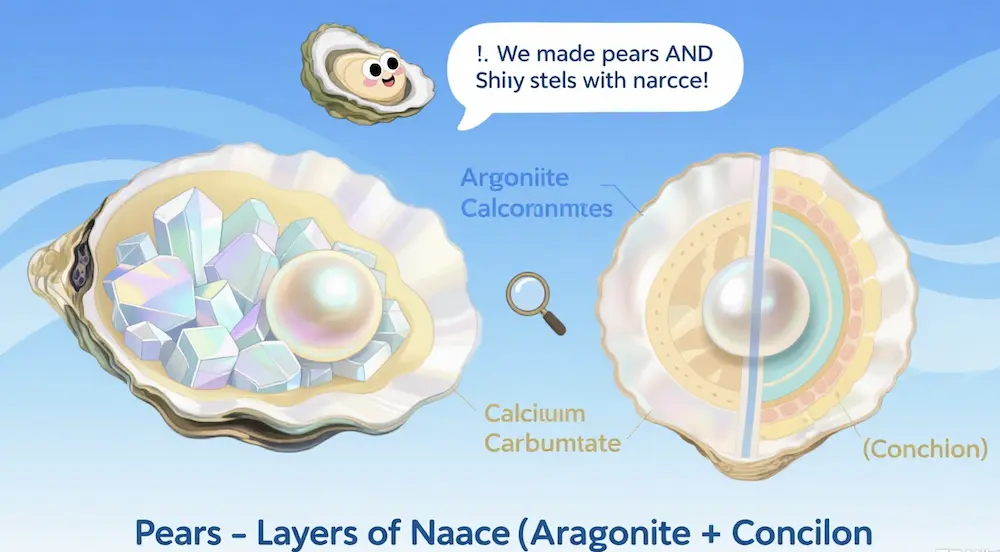
Here is what sets pearls apart. Diamonds and rubies spend eons crystallizing deep underground, but a pearl is often called a 'living gem' because a mollusk grows it, from scratch, as a defense mechanism. That quiet, self-protective act has fascinated humanity across centuries, and it is a big reason pearls sit among the most cherished gems in the world. Which brings us back to the question worth answering: what are pearls actually made of?
7 Facts About What Are Pearls Actually Made Of
Fact 1: What Exactly Composes a Pearl's Structure
Dig into what pearls are actually made of and you uncover a genuinely intricate feat of biology. The particular blend is precisely why pearls feel so distinctive. Each hexagonal plate of aragonite is astonishingly slim, roughly 0.5 micrometers across, and when stacked these plates scatter and bend incoming light. That optical dance produces the celebrated glow and rainbow shimmer we associate with pearls. The conchiolin plays its own role, lending just enough give that a gem built mostly from minerals resists shattering.
It is this exact recipe that gives every pearl its individual character. The aragonite crystals arrive as wafer-thin hexagonal sheets, only about 0.5 micrometers thick, and as light strikes them it reflects and refracts to yield that signature shine and iridescent play of color. So where does conchiolin fit in? It grants the pearl a little flexibility, keeping something that is largely mineral from turning brittle.
| Pearl Component | Percentage | Function |
|---|---|---|
| Aragonite (Calcium Carbonate) | ~95% | Provides hardness and optical properties |
| Conchiolin (Organic Protein) | ~5% | Acts as binding agent and provides flexibility |
| Water | ~2-4% | Maintains structural integrity |
The formation itself works like this: the mollusk lays those materials down in coats, almost the way you would build up layers of paint, wrapping an irritant again and again. Grasping this is central to answering what pearls are actually made of. With every new coat the gem grows larger and reflects light more beautifully. That is exactly why cultured pearls from a reputable Pearl Manufacturer can rival natural ones. Whether nature runs the show alone or a technician lends a hand, the underlying process barely differs.
The Microscopic Architecture of Pearl Formation
The material behind a pearl grows even more compelling once you zoom in on its microscopic layout. This is an essential piece of the puzzle when you ask what pearls are actually made of. Within every nacre layer, minute aragonite tablets stack neatly like bricks in a wall, while conchiolin serves as the mortar binding them in place. That brick-and-mortar arrangement is the secret behind a pearl's remarkable toughness. Incredibly, the finished structure can be up to 3,000 times stronger than its raw ingredients on their own.
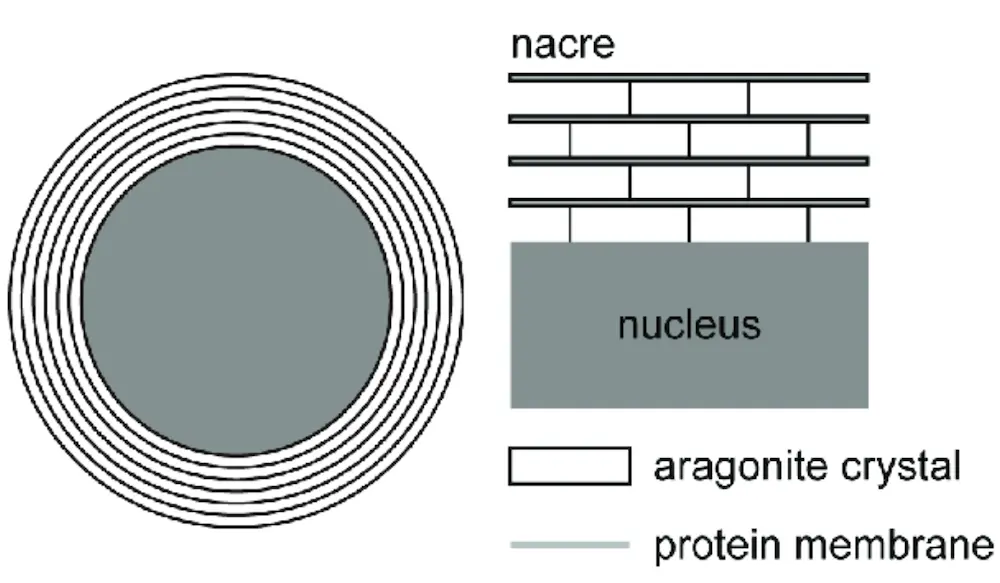
How these tiny building blocks are assembled ultimately dictates a pearl's appearance. Its luster hinges on how thickly and how evenly the aragonite is deposited, and the shifting colors you catch across the surface arise from subtle variations in how those crystals happen to align.
Fact 2: How Different Mollusks Create Pearls
Keep in mind that no two types of pearls are identical. What a pearl is actually made of can shift depending on its origin. Marine oysters, freshwater mussels, and even certain sea snails all produce pearls, yet each one differs a little in its composition and internal makeup.
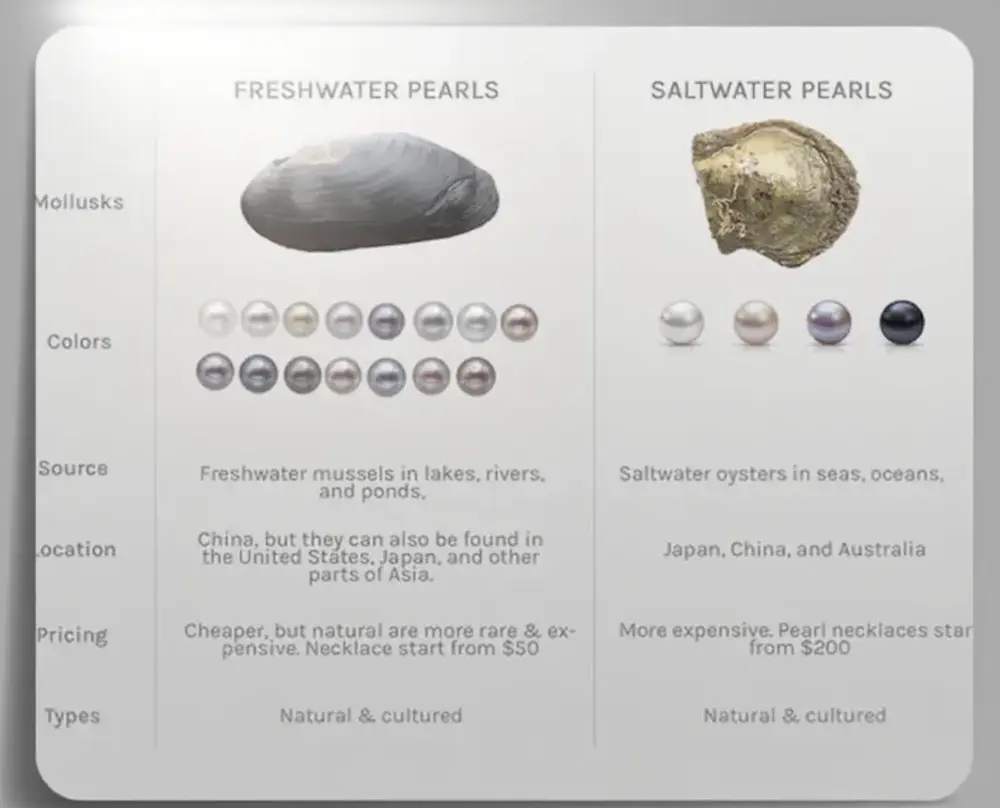
Saltwater pearls, particularly those grown by Pinctada oysters, tend to carry thicker nacre and a tidier arrangement of aragonite crystals, which translates into greater shine and better durability. That gap shows up plainly in the wholesale pearl market, where South Sea and Tahitian pearls command premium prices thanks to their outstanding nacre.
Freshwater pearls, grown by mussels in lakes and rivers, frequently show a slightly different mineral balance because the waters they live in vary so much. That variation can nudge the proportions of aragonite and conchiolin, altering both the look of the pearl and how well it holds up over time.
Non-Nacreous Pearl Varieties
Worth noting, too, is that not every pearl shares the same chemistry. A handful of shellfish yield 'pearls' that contain no nacre at all. Rather than aragonite, which dominates most pearls, these are built largely from calcite. Conch pearls make a good example, produced by the Queen Conch sea snail. Calcite makes up most of their body, and their fibrous internal structure is what conjures that distinctive 'flame' pattern.
| Pearl Type | Primary Composition | Source Mollusk | Distinctive Features |
|---|---|---|---|
| Nacreous Marine | Aragonite + Conchiolin | Saltwater oysters | High luster, round shape |
| Nacreous Freshwater | Aragonite + Conchiolin | River mussels | Various shapes, lower luster |
| Conch | Calcite fibers | Queen Conch gastropod | Pink/orange color, flame patterns |
| Melo Melo | Calcite + organic matrix | Sea snail | Orange/brown, porcelain-like |
Fact 3: The Formation Timeline: How Long Does Nature's Magic Take
To truly appreciate what pearls are actually made of, you also have to reckon with how slowly they come together. In the wild, even a modest pearl needs two to four years to take shape, and larger specimens can demand anywhere from 5 to 20 years to reach full size. The mollusk keeps adding nacre coat by coat over that span, and every single coat takes several days to complete.
Across this drawn-out growth, the surrounding environment leaves a deep mark on what the pearl becomes. Water temperature, salinity, the abundance of food, and even the turning seasons all shape how nacre is secreted. Warmer water usually speeds deposition, whereas cooler water lays down layers that are thicker and more brilliant.
Pearl farms genuinely watch these conditions closely to coax out the finest gems they can. Most of the pearl necklaces filling store shelves today were cultivated for roughly one to three years, the exact span depending on the size and grade the farm is chasing.
Environmental Factors Affecting Pearl Composition
Where a pearl grows shapes its makeup profoundly, right down to trace elements and the specific way its crystals stack. Gemologists can actually separate one pearl from another by reading these mineral 'fingerprints,' which run unique to each stone. Pearls raised in the Persian Gulf, for instance, tend to carry a different trace-element signature than those grown across the South Pacific.
Those same environmental conditions shape a pearl's color and shine as well. The oyster's diet, the minerals dissolved in its water, and even factors like pollution can all shift both the composition and the appearance of the nacre.
Fact 4: Are Real Pearls Truly Cruelty-Free?
One question that surfaces again and again in any talk about what pearls are made of is whether harvesting them is ethical. Must an oyster die for its pearl? Regrettably, the old-fashioned way of gathering natural pearls generally means prying the oyster open, which kills the animal in order to retrieve the gem.
Modern pearl farming has shifted that picture considerably, though. These days a cultivated oyster often survives the insertion that kick-starts pearl growth and can carry on living even after the pearl is later removed. A few forward-thinking farms are going further still, experimenting with techniques that extract the pearl without harming the creature at all.
Sustainability reaches well beyond any single oyster, touching the whole underwater habitat. Responsibly managed pearl farms can actually benefit the sea by keeping the water clean and oyster populations robust. According to the Marine Conservation Society, well-run operations can improve their surroundings, clarifying the water and boosting biodiversity.
Modern Ethical Pearl Farming Practices
Increasingly, contemporary pearl farming centers on methods that spare the environment. Many operations now practice the following:
- Selectively breeding suitable oysters so they yield more pearls without draining wild populations.
- Testing water quality on a regular basis to keep the surrounding ecosystem in good health.
- Rotating farming zones so no single stretch of ocean bears too much pressure.
- Developing approaches that let oysters go on living once the pearl has been harvested.
Fact 5: Why Pearls Command Such High Prices
Getting to grips with what pearls are made of goes straight to the source of their worth. The elaborate biological path they travel, the years it consumes, and their singular organic composition all feed into their inherent value. Natural pearls are exceedingly scarce, and in earlier times a diver might have to comb through hundreds of oysters just to turn up a single one fit to be called a gem.
Adding to that rarity is the fact that pearls form only under highly particular circumstances. Not every intruder lodged inside an oyster triggers a pearl, and even when one does form, it may emerge lopsided or dull. According to National Geographic, fewer than 1% of wild oysters ever yield pearls of true gem quality.
Cultured pearls cost less to produce, yet the process still swallows enormous time, capital, and expertise. Trained technicians are required to launch pearl growth inside the oysters, and the gems then need two to four years to develop, which means considerable money stays locked up long before any return arrives.
Market Factors Influencing Pearl Prices
| Quality Factor | Impact on Price | Related to Composition |
|---|---|---|
| Luster | High – 40% of value | Nacre layer quality and thickness |
| Surface Quality | High – 25% of value | Consistency of aragonite deposition |
| Shape | Medium – 20% of value | Nucleation technique and mollusk health |
| Size | Medium – 10% of value | Formation time and nacre accumulation |
| Color | Low – 5% of value | Trace elements and organic compounds |
Knowing what pearls are made of goes a long way toward explaining why their prices swing so widely. The thickness of the nacre, the coating that is the pearl, directly governs both its shine and its longevity, so pearls carrying thick nacre carry higher value. By the same token, surface flaws, which commonly trace back to uneven nacre deposition, drag a pearl's worth down.
Fact 6: The Science Behind Pearl Colors and Luster
What makes all this so absorbing is how a pearl's composition dictates the way it looks, which sits at the core of answering what pearls are actually made of. The aragonite crystals threaded through the nacre form patterns that interfere with light as it filters through them. The result is a rainbow-like effect known as 'orient,' the shifting, shimmering wash of color that seems to travel across the pearl's surface.
Trace amounts of other elements folded in during formation can also tilt a pearl's underlying color. Iron nudges hues toward gold, while silver deepens them. The thickness of each nacre layer weighs in too: thinner coats tend to bring out blues and greens, whereas thicker ones warm the palette.
Conchiolin, the organic component, is what lends pearls their 'warmth.' That is precisely what separates them from purely mineral gemstones. This natural material gives pearls a soft, gentle glow, a world apart from the crisp glitter of a diamond or the blazing color-play of an opal.
Understanding Pearl Surface Phenomena
The interplay between a pearl's makeup and its appearance gives rise to several distinctive optical effects:
- Luster: The nacre surface throws back light almost like a mirror, an effect that depends on how smooth and even the underlying aragonite layers are.
- Orient: The migrating colors across a pearl's surface, produced as light rebounds off successive nacre layers.
- Overtone: The secondary hues that appear to hover just beneath the surface, emerging when the pearl's base color meets the optical behavior of the nacre.
Fact 7: Natural vs. Cultured Pearls — Where Their Composition Differs
Any honest answer to what pearls are actually made of has to separate the natural from the cultured. Chemically the two are twins, both built from aragonite and conchiolin, yet the circumstances under which each takes shape leave subtle marks that set them apart.
Because a natural pearl forms by chance in open water, its nacre is laid down in a far less orderly fashion. Those very irregularities can raise its worth, giving each stone a one-of-a-kind character that a cultured pearl simply cannot copy.
A cultured pearl, by contrast, matures under managed conditions, so its nacre builds up in noticeably more uniform layers. The payoff is steadier, more predictable quality, though at the cost of the quirky individuality natural pearls carry. There is also a structural distinction: a natural pearl is solid nacre through and through, whereas a cultured one is grown around an implanted mother-of-pearl bead that forms its core.
These days a gemologist does not have to guess. An X-ray reveals the interior architecture of a pearl, exposing whether it is nacre all the way down or built around a seeded nucleus, and confirming exactly what it is made of.
Caring for Your Pearls: Protecting Their Unique Composition
Understanding what pearls are made of matters enormously once you own them. Their partly organic makeup — that conchiolin binder — leaves them far more vulnerable to acids, high heat, and harsh chemicals than a purely mineral gemstone would ever be.
Their calcium carbonate can literally be eaten away by anything acidic, whether that is lemon juice, vinegar, or simply an excess of perspiration. For that reason, give each pearl a gentle wipe with a soft, slightly damp cloth after you wear it, and keep it apart from the rest of your jewelry.
Being organic at heart, pearls can also gradually dry out, dull, or even develop surface cracks over the years. Curiously, wearing them now and then does them good: contact with the natural oils of your skin helps keep those organic components supple and alive.
For storage, reach for something that breathes rather than a sealed plastic bag. A setting with moderate humidity suits them best, keeping the organic material in good health while giving bacteria no foothold.
The Future of Pearl Science and Innovation
Every time we probe what pearls are actually made of, we deepen our grasp of how living organisms build minerals. Researchers are now examining the way mollusks steer the growth of aragonite crystals, hoping to borrow those tricks for industrial use.
In nanotechnology, the pearl's celebrated "brick and mortar" arrangement has become a template for a new class of materials that are at once remarkably strong and remarkably light. Cracking the logic of how nacre assembles itself could reshape a great deal of how we manufacture things.
Genetic work on pearl-forming mollusks is being pursued to enrich nacre quality and shorten the time it takes to build. These efforts remain experimental, but they hint at a future where superb pearls are easier to come by without sacrificing the natural beauty and singular composition that define them.
Turning pearls into instruments for tracking water quality is another intriguing prospect. Since a pearl's makeup mirrors the surroundings in which it grew, scientists can read its composition like a record and reconstruct past shifts in marine ecosystems.
Blending age-old wisdom with fresh scientific tools keeps turning up new revelations about these extraordinary gems. The better we understand what pearls are actually made of, the more we marvel at the intricate processes that bring these treasures of the sea into being.
FAQs
Are oysters killed when pearls are removed?
In most cases, yes. Prying the shell open kills the animal, and the meat is then left over as a by-product.
Are pearls cruelty free?
Not really. The mussel or oyster is put under stress and ultimately dies, which is why many vegans choose to avoid pearls altogether.
Is it true that oysters make pearls?
Yes. Both mussels and oysters wrap an intruding irritant in layer after layer of nacre, and that coating becomes the pearl.
Is making pearls painful for oysters?
Their nervous systems are quite basic, so what they undergo is better described as stress than pain in the way we experience it — even so, they do not survive harvest.