


Let me clear this up before we go any further: cultured pearls are one hundred percent real pearls. No asterisk, no caveat.
I’ve lost count of how often buyers reach out to our factory asking for “real pearls, none of that cultured stuff.” It’s a little maddening, if I’m honest. I get why the mix-up happens, but having worked hands-on with Pearl Manufacturer operations for years, I feel obligated to correct it. Nearly everything sitting in a jewelry case—at Tiffany’s, at the shop down your street, or moving through wholesale pearls suppliers—is a cultured pearl. And it is every bit as genuine as whatever your great-grandmother may have pried out of an oyster generations ago.
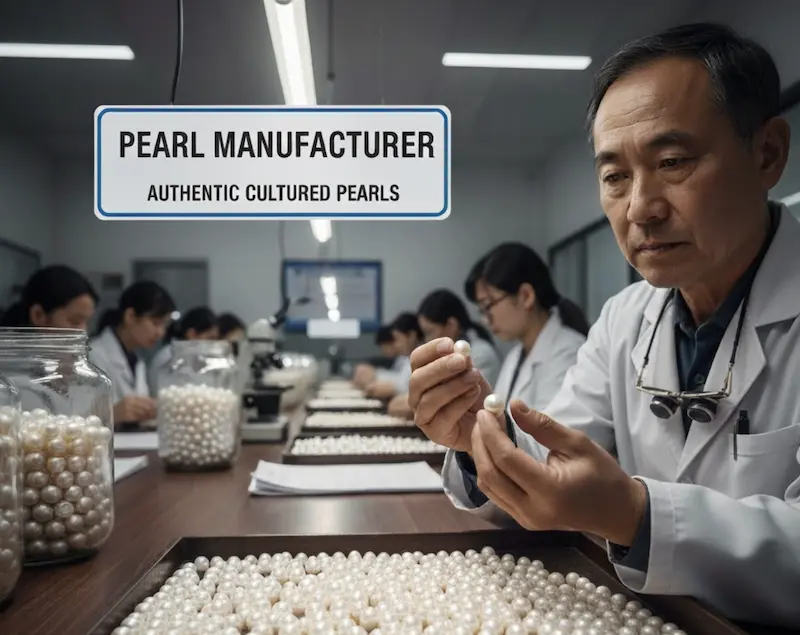
So What Exactly Are Cultured Pearls?
Here’s where the topic gets genuinely interesting. Cultured pearls form inside living mollusks, exactly the way natural pearls do. The only real distinction? We give the process a deliberate nudge.
Think of it as farming your food rather than foraging for it. A tomato grown on a farm is still a genuine tomato, isn’t it? The logic carries over directly. Pearls are made through a biological mechanism that predates us by millions of years, and cultivating pearls simply taps into that same mechanism. All we do is trigger it intentionally instead of leaving it to random chance.
A trained technician gently inserts a small nucleus—typically a little bead carved from freshwater mussel shell—together with a sliver of mantle tissue into a host mollusk. From there, the animal does what mollusks instinctively do: it begins laying down nacre, that luminous substance responsible for a pearl’s signature glow. Month after month, sometimes year after year, the nacre wraps around the nucleus in successive layers. The result is a true pearl, produced by a living organism as part of its own defense mechanism.
The Science Behind How Pearls Form
Nacre—commonly called mother-of-pearl—is the shared building material of both natural and cultured pearls. It’s calcium carbonate arranged into aragonite crystals and held together by a protein known as conchiolin. Slide either kind of pearl under a microscope and the crystalline architecture looks the same, natural or cultured.
A mollusk releases nacre whenever something irritates it. In the wild the culprit might be a parasite, a shell fragment, or a stray grain of sand. When cultivating pearls, we introduce that irritant on purpose. And this is the crux of it: once the nucleus is seated, everything that follows is entirely natural. The oyster has no awareness that a human placed it there—it just responds the way evolution taught it to.
Getting to Know Nacre Quality
How thick and how fine the nacre is will shape both a pearl’s durability and its beauty. Natural pearls tend to carry thicker nacre because they’ve been forming in the wild for ages—occasionally for decades. Cultured pearls, by contrast, develop over a set window that depends on the variety, generally somewhere between 6 months and 7 years.
Don’t let that lead you to assume cultivated pearls are somehow lesser. The techniques pearl farmers rely on today have advanced enormously. Top-tier cultured pearls from respected Pearl Manufacturer now achieve nacre thickness on par with plenty of natural pearls—which is precisely what gives them their longevity and that coveted radiance.
Why Natural Pearls Are Nearly Extinct (And Absurdly Pricey)
Let’s deal with reality. Stumbling on a natural pearl is extraordinarily uncommon. Cracking open roughly 10,000 oysters is the going rate for finding a single decent one. Centuries of overharvesting have stripped most of the world’s natural pearl beds bare. Very few natural pearls remain in circulation today—the bulk have already been collected or now sit behind glass in museums and private holdings.
At auction, a strand of natural pearls can comfortably command $1 million or more. Remember when Gina Lollobrigida’s pearl and diamond earrings went for £1.6 million back in 2013? Those were natural pearls. Unless you happen to be royalty or shopping with a seven-figure jewelry budget, cultivated pearls are what you’re after—and honestly, that’s no bad thing.
According to the Gemological Institute of America, upwards of 95% of the pearls trading in today’s market are cultivated. This isn’t some buried secret. It’s simply how the modern pearl trade operates.
The Four Principal Types of Cultured Pearls
Cultured pearls aren’t all cut from the same cloth. Knowing the different categories puts you in a far better position to judge what you’re actually purchasing.
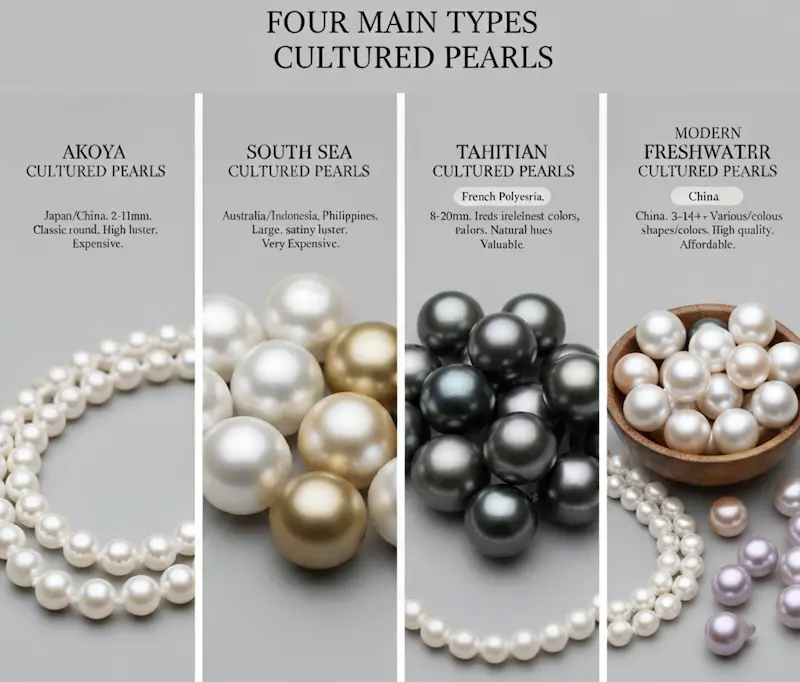
Akoya Cultured Pearls
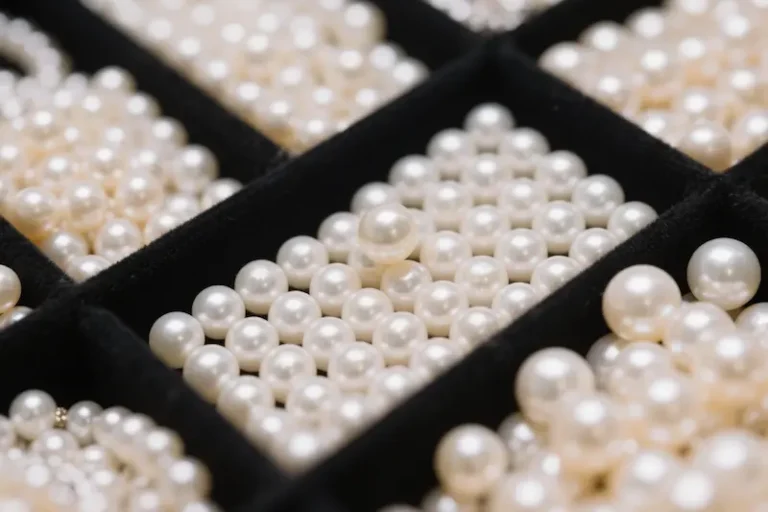
These are what most people picture the moment they hear “classic white pearl.” Akoya cultured pearls are cultivated largely in saltwater across Japan and China, prized for their near-perfect round form and their crisp, mirror-bright shine. They typically measure between 2 and 11 mm across.
When someone pictures traditional pearl jewelry—those elegant strand necklaces, for instance—they’re usually picturing Akoyas. Because they undergo one of the most exacting cultivation methods in the trade, they rank among the pricier cultured pearls out there.
South Sea Cultured Pearls
If Akoyas are the classics, South Sea pearls are the royalty. They’re the largest and rarest cultured pearls the market offers, cultivated in Australia, Indonesia, and the Philippines. They can reach up to 20mm—positively enormous next to other varieties.
South Sea cultured pearls generally fall into two color families—white/silver or golden—determined by the oyster species involved (Pinctada maxima). Their cultivation stretches out considerably, usually 2 to 4 years, which accounts for their remarkable nacre thickness and that soft, satiny glow they’re known for. One strand can readily run $100,000 or beyond.
Tahitian Cultured Pearls
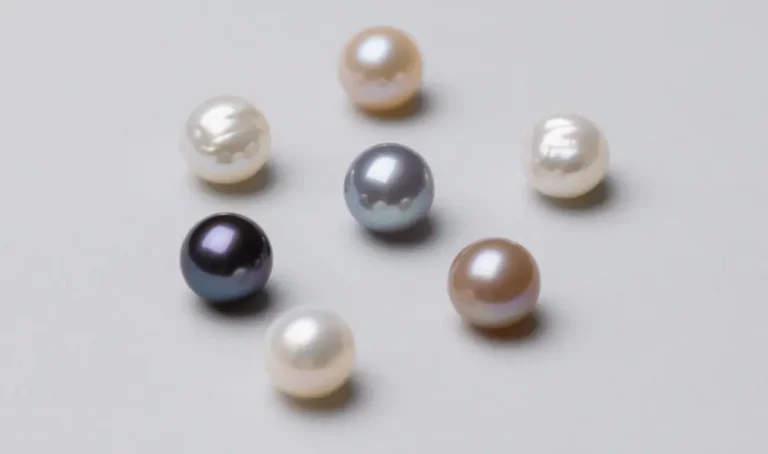
The nickname “black pearls” is misleading. Tahitian cultured pearls actually appear in a breathtaking spectrum of dark tones—silver, grey, green, blue, and purple overtones among them. They’re grown chiefly in French Polynesia from the black-lipped oyster (Pinctada margaritifera).
These pearls carry a charm all their own. Those uncommon shades arise entirely on their own, with no tampering, which is a big part of what makes them so prized. They typically range from 8mm to 18mm and take 2 to 4 years to reach that point.
Freshwater Cultured Pearls
This is where things get especially interesting from a manufacturer’s vantage point. The transformation of freshwater pearls over the past two decades is remarkable. They were once dismissed as cheap, lopsided, rice-shaped beads. Those days are gone.
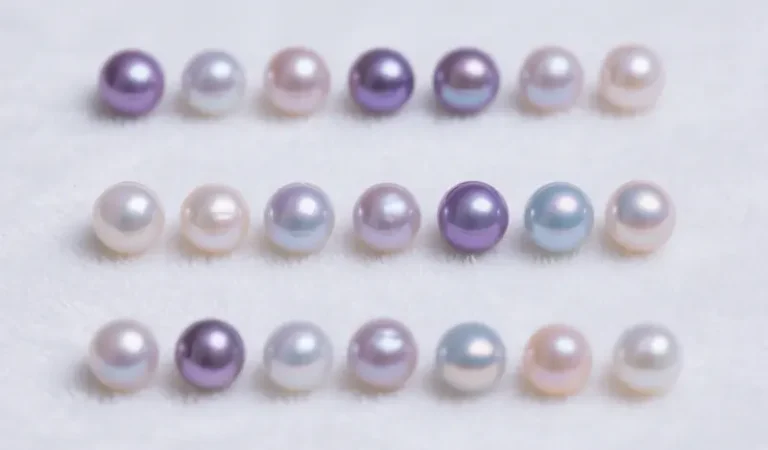
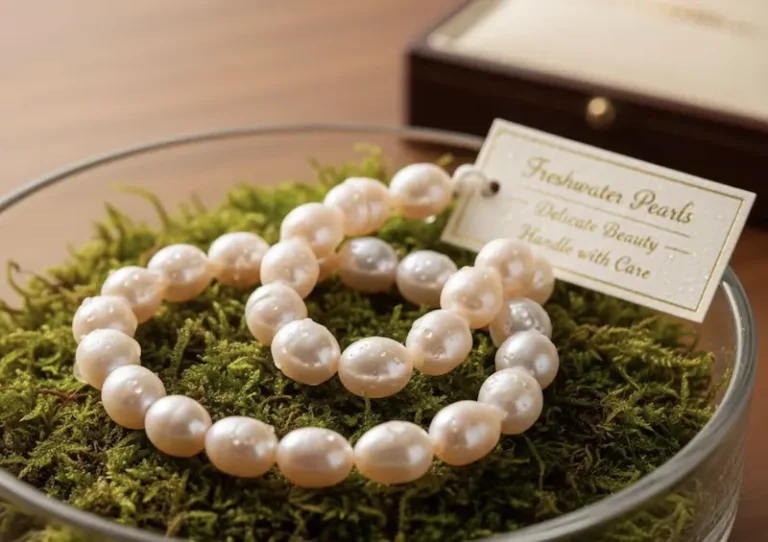
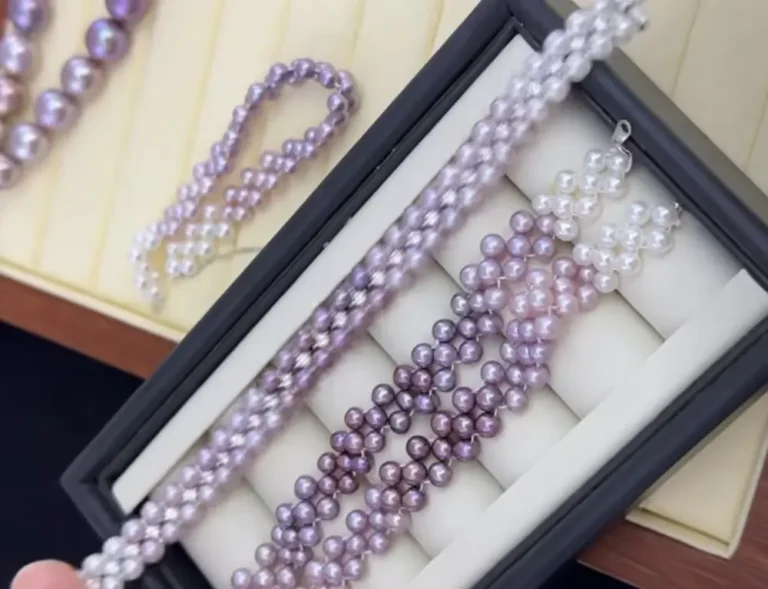
Today’s freshwater cultivated pearls—cultivated mostly in China—now rival their saltwater cousins. They span a broad palette: white, peach, lavender, pink, and more recently some gorgeous metallic tones. A single freshwater mussel can yield as many as 25 pearls in one go, which keeps supply plentiful and prices accessible. Yet the quality has climbed dramatically. Certain freshwater cultivated pearls now approach flawless roundness and shine, going toe-to-toe with Akoyas at a fraction of the cost.
| Pearl Type | Origin | Size Range | Cultivation Time | Price Range |
|---|---|---|---|---|
| Akoya | Japan, China | 2-11mm | 10-18 months | $$ |
| South Sea | Australia, Indonesia, Philippines | 9-20mm | 2-4 years | $$$$ |
| Tahitian | French Polynesia | 8-18mm | 2-4 years | $$$ |
| Freshwater | China | 2-15mm | 1-6 years | $ |
How to Judge Cultured Pearl Quality
Years in this business have taught me that grasping the quality factors changes everything. The Gemological Institute of America lists seven value factors for pearls, but let me boil down what genuinely counts once you’re at the point of buying:
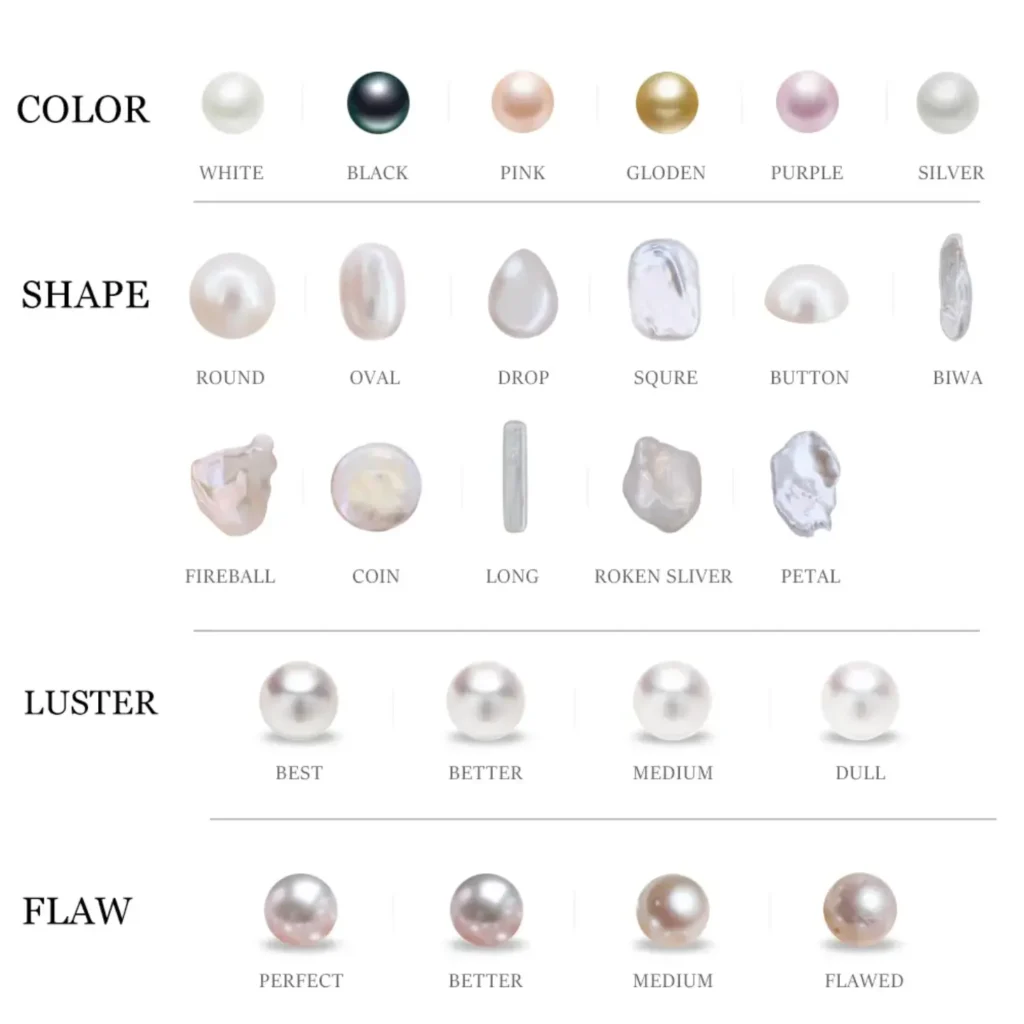
- Luster: This is the heavyweight factor. Luster describes the reflective quality—how sharply light bounces off a pearl’s surface. A high-grade cultured pearl should throw back a mirror-like reflection, nearly returning your own face to you. Flat, chalky-looking pearls point to thin nacre or subpar quality.
- Surface Quality: Genuine pearls are never flawless. Even the finest cultured pearls may carry small surface traits—faint spots, wrinkles, or slight irregularities. That’s actually a good sign, since it confirms they’re authentic. Still, the fewer the blemishes, the higher the grade.
- Shape: Round has always been the most valued, but don’t overlook baroque forms. Near-round, oval, drop, and baroque cultured pearls keep gaining popularity, particularly among modern jewelry designers drawn to their organic, one-of-a-kind character.
- Color: This comes down mostly to personal taste, though a few colors do fetch premiums. Color breaks into bodycolor (the dominant hue) and overtones (the subtle shades that shift as light moves across the surface). Some pearls also reveal “orient”—that rainbow iridescence you occasionally catch.
- Size: Larger usually means costlier, yet size on its own doesn’t set value. A smaller pearl with outstanding luster will beat a big one with poor surface quality every single time.
Common Myths About Cultured Pearls (Straight From Someone Who Makes Them)
Myth #1: “Cultured pearls are fake.”
Not so. We’ve already been over this, but it’s worth saying again. Cultured pearls are authentic pearls formed inside living mollusks, sharing an identical chemical makeup with natural pearls. The wholesale pearls industry simply couldn’t exist if these weren’t real gemstones.
Myth #2: “Natural pearls are always the higher quality.”
False. Sure, natural pearls are scarcer, and yes, they cost more. But better quality? Not necessarily. Plenty of natural pearls turn out small, uneven, or thin on nacre. Modern cultured pearls are raised under optimal conditions with expert oversight, and more often than not the quality control is tighter.
Myth #3: “Every cultured pearl is cheap.”
Say that to the person who just handed over $150,000 for a strand of South Sea cultured pearls. Fine cultured pearls fetch serious money. The word “cultured” speaks to the growing method, not to worth.
Myth #4: “You need X-rays to tell them apart.”
Actually, specialists can frequently spot the differences using UV light or magnification—there may be a visible boundary between the nucleus and the nacre layers in a cultured pearl. But here’s the point: for jewelry purposes, that distinction barely matters at all.
The Environmental and Ethical Upside
Here’s a point that gets far too little airtime: cultured pearl farming is genuinely beneficial for the environment. Pearl farms can only flourish in pristine water. Each hectare of oyster reef filters roughly 2.7 billion liters of water every year, according to research from The Nature Conservancy.
Consider the alternative. Diving for natural pearls in the old days was brutal, hazardous labor. Divers risked drowning, shark attacks, and decompression sickness, and fatalities weren’t rare. The trade also wiped out wild oyster populations. Cultured pearl farming upended all of that—it’s safer, sustainable, and doesn’t drain the wild stock.
Many modern pearl farms are family-run enterprises passed down through generations. The farmers have every reason to keep the water clean and their mollusks healthy, because a thriving oyster yields a finer pearl. It really is that straightforward.
How Cultured Pearls Are Genuinely Made: A Manufacturer’s Inside Look
People tend to romanticize the whole thing, picturing lab-coated technicians bent over microscopes. The truth is at once more ordinary and more captivating.
Step 1: Preparing the Nucleus
It begins with freshwater mussel shells, most often from the Mississippi River basin in the United States. Those shells get sliced into strips, then cubes, then meticulously ground and buffed into perfect spheres. Precision is everything here—each nucleus bead has to be flawlessly smooth and round.
Step 2: The Grafting Process
This calls for a seasoned technician with years under their belt—we’re essentially performing microsurgery on a living animal. The technician makes a tiny incision in the oyster’s gonad (for saltwater pearls) or in the mantle tissue (for freshwater pearls), then slips the nucleus in alongside a small piece of mantle tissue taken from a donor oyster. That donor tissue is essential: it grows around the nucleus and forms the pearl sac responsible for secreting nacre.
Step 3: The Waiting Game
Now patience takes center stage. The oysters go back into the water, where they’re watched closely for months or years. Water temperature, salinity, the availability of food—every one of these variables shapes the final pearl. Farmers have to guard against disease, predators, and shifting conditions. This is farming in the fullest sense of the word.
Step 4: Harvest
When the moment arrives, each oyster is opened to see what has taken shape within. Not every one yields a gem-quality pearl. Some produce misshapen results; others reject the nucleus outright. Success rates fluctuate, but even in ideal conditions only about 50-60% of cultured pearls prove good enough for jewelry.
Why the Word “Cultured” Trips People Up
I lay a fair share of the blame on the marketing language. When the Japanese pearl-farming pioneer Kokichi Mikimoto first introduced cultured pearls in the early 1900s, the natural pearl establishment pushed back hard, even trying to forbid the word “pearl” for the cultured kind entirely.
The eventual compromise was the label “cultured pearls.” The trouble is that “cultured” makes the product sound manufactured—like “cultured meat” or “cultured cells” in a laboratory. That’s not what’s going on at all. These pearls grow inside living mollusks through biological processes. There’s nothing synthetic about them.
Some old-school jewelers cloud the picture further by calling freshwater pearls “cultured pearls” while labeling Akoyas simply “pearls” or “saltwater pearls,” hinting that one is somehow more “real.” That’s misleading in the kindest reading and exploitative in the worst. Every pearl you can buy commercially is cultured. End of story.
Investment Value: Are Cultured Pearls Worth the Money?
Strictly as an investment, fine cultured pearls hold their value impressively well. A strand of top-grade Akoya or South Sea cultured pearls bought today stands a good chance of appreciating over time, especially as pearl farming runs into mounting environmental pressures and rising costs.
But here’s my candid view: buy cultured pearls because you love them, not chiefly as an investment. Unlike diamonds, pearls are organic gems that need care. Chemicals, perfumes, even the natural oils on your skin can harm them. Treated properly, though, cultured pearls can endure for generations.
The soundest investment is buying quality from trustworthy sources. Deal with established Pearl Manufacturer suppliers who can document where their pearls came from and what quality traits they carry. Know exactly what you’re buying. A $500 strand of high-quality cultured pearls will bring you more joy than a $5,000 strand of mediocre ones bought for the label alone.
FAQs
Are cultured pearls real pearls?
Yes—cultured pearls are genuine pearls that form with a helping hand from humans.
Are cultured pearls worth anything?
Yes—their value spans from modest to substantial, depending on type, size, luster, and surface.
Which is better, freshwater or cultured pearls?
“Cultured” describes a method, not a category; top-grade cultured freshwater pearls can match or even outdo saltwater cultured pearls.
How can you tell if cultured pearls are fake?
Try rubbing them lightly against your teeth—authentic cultured pearls feel faintly gritty, whereas glass or plastic imitations feel perfectly smooth.
The Bottom Line: Real Gems for Real People
Whenever you buy cultured pearls—classic Akoyas, exotic Tahitians, luxurious South Seas, or budget-friendly freshwater pearls—you’re walking away with genuine pearls. Real gemstones. Enduring beauty meant to be handed down through the generations. The cultured pearl trade opened these treasures up to everyone. A century ago, only the wealthy could dream of pearl jewelry; cultured pearl farming has let millions share in the elegance and refinement pearls bring. That’s not a bargain—it’s progress.
Whenever you buy cultured pearls—classic Akoyas, exotic Tahitians, luxurious South Seas, or affordable freshwater pearls—you’re walking away with genuine pearls. Real gemstones. Lasting beauty meant to be passed down through the generations.
So the next time someone insists they want “real pearls, not cultured ones,” you can set them straight. Cultured pearls are the real thing—simply actual pearls that people and mollusks create together. And there is nothing false about that.