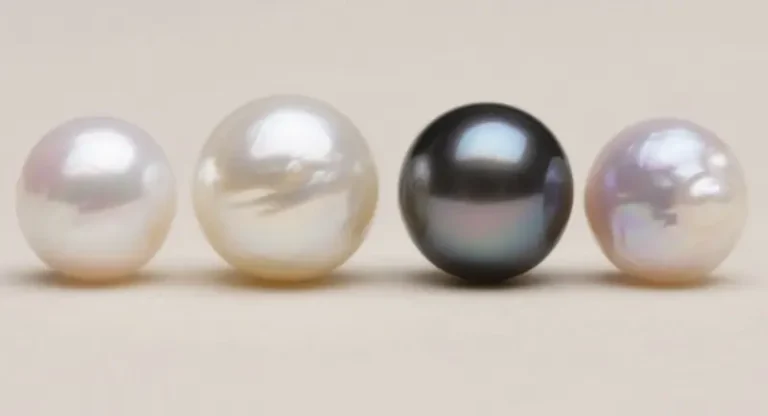



Ask most people to picture a pearl and they will describe a flawless white sphere. The reality is far more colorful. Once you start looking closely at pearls colors, an entire palette opens up, extending well beyond white. The range is remarkable: inky midnight black, warm champagne gold, tender blush pink, and even the scarce, sought-after blue.
Working with these organic gems for years has taught me a great deal about how pearls colors actually form. In the pages ahead, I want to walk you through that surprising spectrum, explain what sets each shade apart, and help you settle on the one that truly belongs in your collection.
What Determines Pearls Colors?
None of these pearls colors happen by chance. Each is the outcome of nature and chemistry working hand in hand. Where a diamond or sapphire borrows its color from the minerals in its crystal, a pearl takes its hue from living biology, built up inside a breathing mollusk.
As a pearl manufacturer forms a pearl, the shade of its lip usually foretells the color the finished gem will carry. Say the word "pearl" and many people immediately picture Tahitian oysters. Known as the black-lipped margaritifera, these mollusks earned their reputation by producing the striking gray and black pearls so many collectors covet.
Nacre thickness carries a lot of weight here. Research in Scientific Reports attributes a pearl's structural color to how light plays across its nanolayered nacre. When that nacre is thick, the resulting color runs deeper, brighter, and shows bolder overtones. Thin nacre, by contrast, leaves a pearl looking chalky and washed out.
Environment plays its part too. The waters a mollusk lives in, the minerals dissolved there, even the local water chemistry, all leave their mark on the final pearls colors. It is precisely why pearls harvested in one part of the world rarely match those from another.
The Complete Spectrum of Pearls Colors
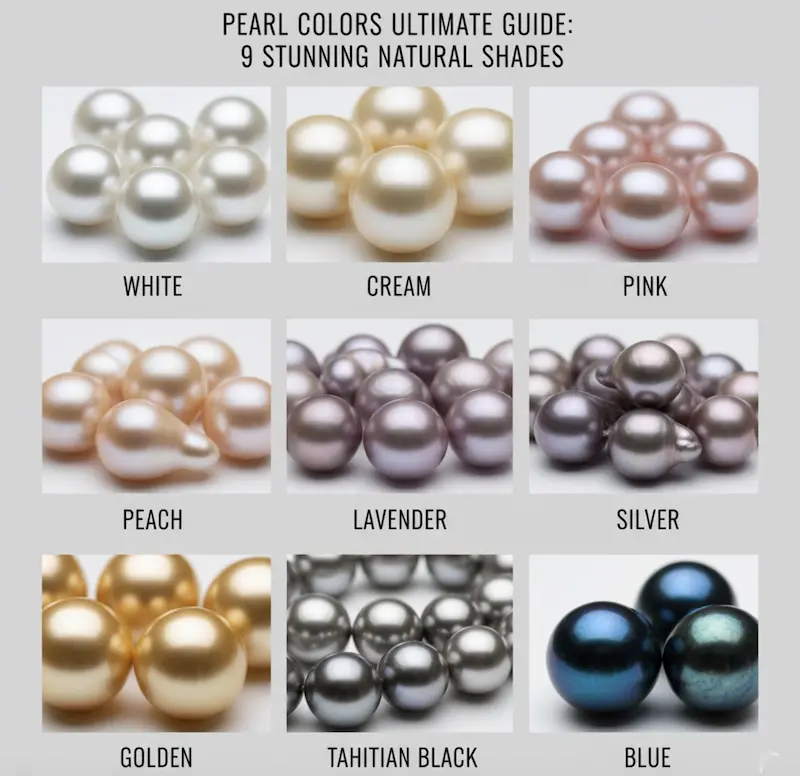
The world of pearls colors holds a whole array of gorgeous natural tones. Here are the nine principal shades you are likely to encounter on the pearl market:
1. White Pearls: The Timeless Classic
Among every one of the pearls colors, white remains the most recognized and cherished. Yet "white" carries far more subtlety than the word suggests. It might read as a warm, creamy ivory or, at the other end, a cool and brilliant silver-white.
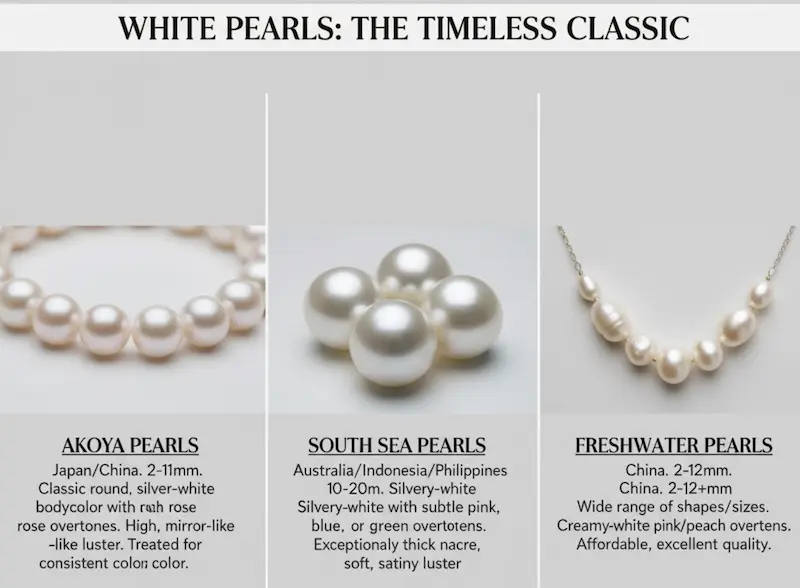
- Akoya pearls: Prized worldwide for their white bodies and soft rose overtones, Akoya pearls come from China and Japan. Ranging from 2mm to 11mm, these saltwater gems are the ones most people picture when they imagine classic pearl jewelry. According to the Gemological Institute of America, many white Akoya pearls are bleached and "pinked" to develop that signature rose overtone.
- South Sea pearls: For white pearls, South Sea varieties from Australia, Indonesia, and the Philippines offer another route. Counting among the largest available, they typically span 10 to 20 mm. Their natural silvery-white bodies often carry faint suggestions of pink, blue, or green.
- Freshwater pearls: When affordability matters most for white pearls, freshwater is the smart pick. Grown primarily in China, these gems span an enormous size range, from minute 2mm seed pearls up to substantial 12mm-plus specimens. A hint of cream or pink often warms their white tone, endearing them to collectors and jewelry designers alike.
For centuries white pearls have stood for purity, innocence, and faith, which is why brides so often wear them down the aisle. They also suit any setting, slipping just as easily into everyday wear as into black-tie occasions.
2. Black Pearls: Exotic Elegance
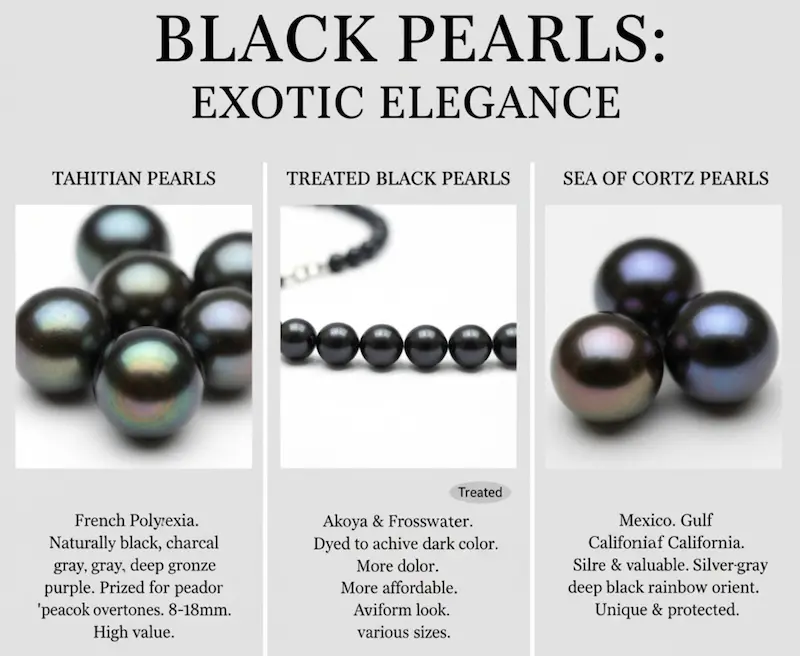
Within the range of pearls colors, black ranks second in popularity. There is something mysterious and refined about these gems. Genuinely black pearls, however, remain a real rarity in nature.
Tahitian pearls are the best-known of the naturally black varieties. Cultivated in the saltwater lagoons of French Polynesia, they arrive in far more than black alone, appearing in charcoal gray, deep green, bronze, even purple. The finest command "peacock" coloring, a luminous interplay of green, gold, and rose overtones that dances across the whole surface.
Keep in mind that not every black pearl is the real thing. Black Akoya and black freshwater pearls owe their darkness to organic dyes. Such treated pearls are every bit as lovely and cost far less, but they never command the value of a naturally black Tahitian.
Mexico's Sea of Cortez pearls make up the second group of naturally black cultured pearls. Rare finds from the Gulf of California, they span a stunning breadth of pearls colors, from silver-gray through deep black lit with rainbow overtones.
3. Golden Pearls: Regal Radiance
Warm and elusive, golden pearls are truly one of a kind. Golden South Sea pearls rank among the most treasured of all pearls colors and stand among the most valuable gems anywhere.
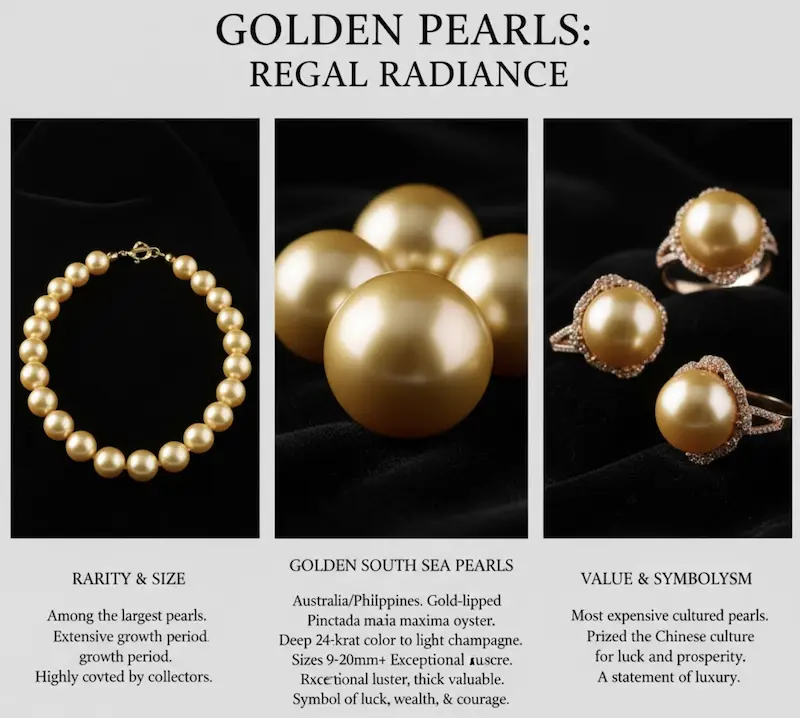
These beauties are born from the gold-lipped variety of Pinctada maxima oysters found around Australia and the Philippines. Their color spans everything from pale champagne to a deep 24-karat gold, and the priciest examples glow intensely with a rich, even tone.
Their considerable size only heightens the appeal of golden South Sea pearls. Most fall between 9mm and 20mm, with a few approaching the size of a golf ball. That combination, generous scale, rare color, and thick nacre, is exactly what collectors chase.
Golden pearls carry deep meaning in Chinese culture. One legend holds that they tumbled from the heavens during battles between dragons, while others credit them with bringing luck, wealth, and courage to whoever wears them.
Among the wholesale pearls you can buy, the golden ones carry the steepest price. Still, if a truly singular gem is what you are after, their extraordinary appearance more than justifies the cost.
4. Pink Pearls: Romantic Sophistication
Gentle and feminine, pink is a much-loved shade for pearls and a charming stand-in for white across the spectrum of pearls colors. These warm tones have surged in popularity over recent years.
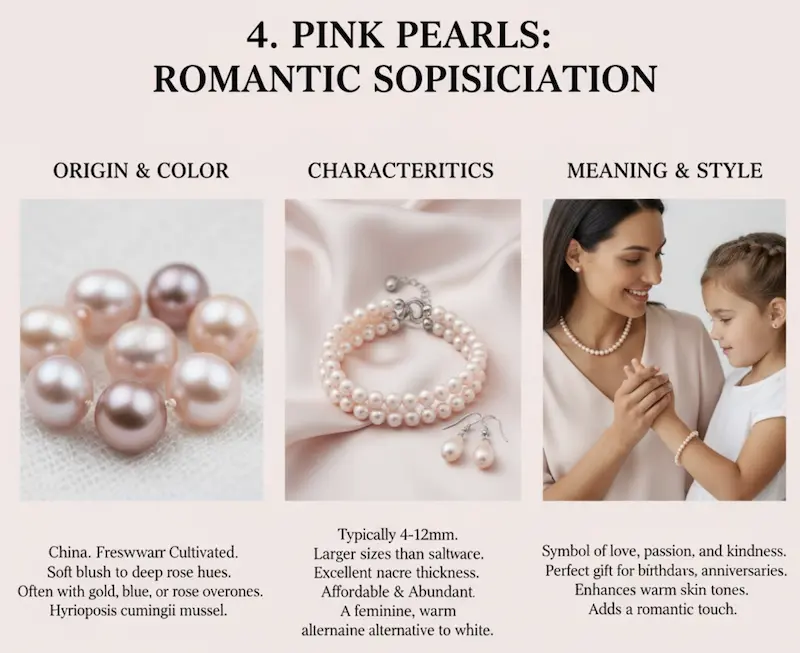
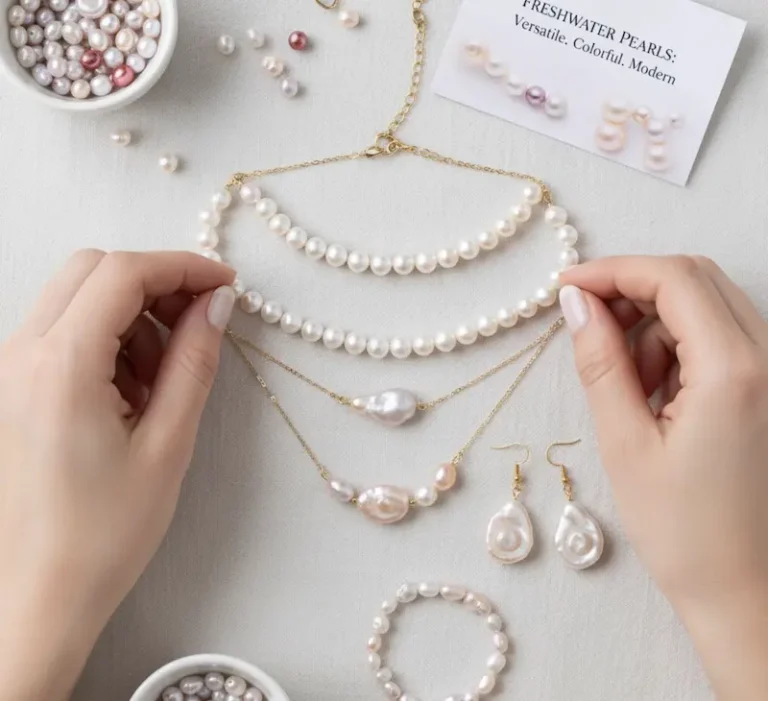
Most pink pearls originate from freshwater pearls raised in China's lakes and rivers. They span every shade of pink, from the palest blush to a deep rose, and look their best accented with blue, green, gold, or rose tones.
The pink comes down to the mussel being farmed, specifically the Hyriopsis cumingii pearl mussel. Such pearls tend to run considerably larger than saltwater types, measuring 4 to 12 mm across.
Pink pearls speak to love, passion, generosity, and kindness, which makes them heartfelt gifts for birthdays, anniversaries, or simply to tell someone they matter, and mothers treasure them above all. These pearls colors flatter warm skin tones and lend any outfit a romantic note.
5. Peach Pearls: Warm Sunset Hues
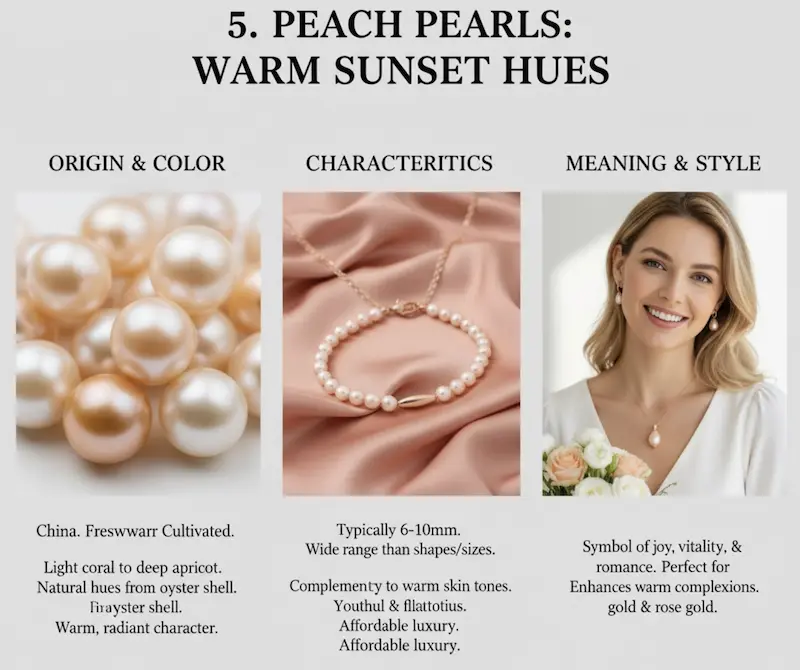
Peach pearls glow in warmer tones that run from soft coral to a deeper apricot. These freshwater gems draw their peachy color from oysters whose shells are naturally peach-hued. Warm and playful by nature, these pearls colors are made for romantic occasions.
Should your complexion lean toward warm undertones, peach is among the most flattering pearl shades you can wear. That soft apricot glow lends jewelry a youthful air and pairs beautifully with both gold and rose gold settings.
6. Blue Pearls: Ocean Treasures
Natural blue counts among the scarcest of all pearls colors. Authentic blue pearls can range from a soft silvery-blue to a deep midnight tone, frequently laced with green or purple undertones.
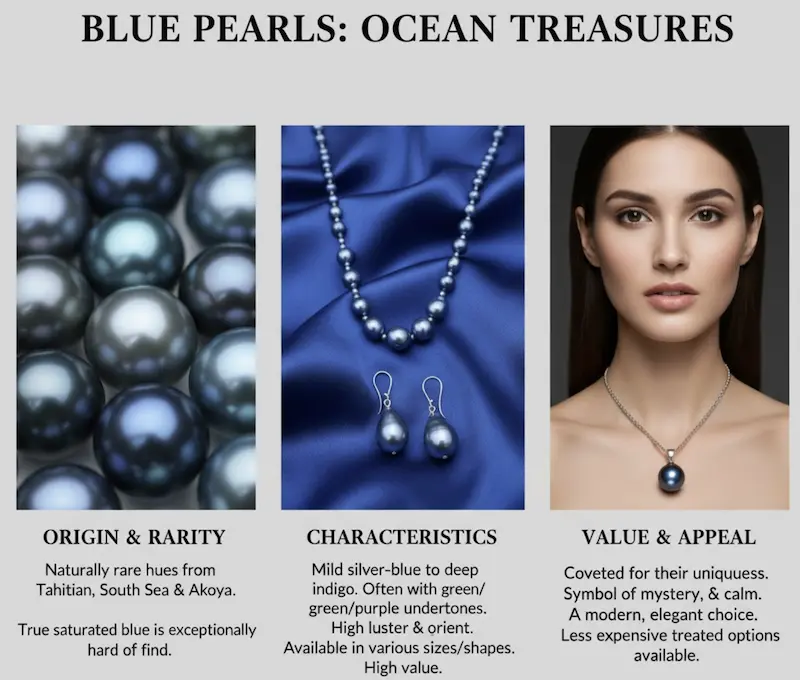
Certain Tahitian pearls, silver-blue South Sea pearls, and blue Akoya pearls may reveal blue tones on their own. Genuinely saturated blue, however, is exceptionally hard to come by. Specialists note that blue pearls have existed for decades yet have only lately gained a following in jewelry shops. Because natural blue pearls are so scarce, they carry a hefty price. Seek out blue pearls with strong brilliance that will not stretch your budget too far.
7. Lavender Pearls: Ethereal Beauty
Lavender and purple pearls lend jewelry an airy, delicate quality. Born of freshwater cultivation, these gems appear in shades running from pale violet to a rich mauve.
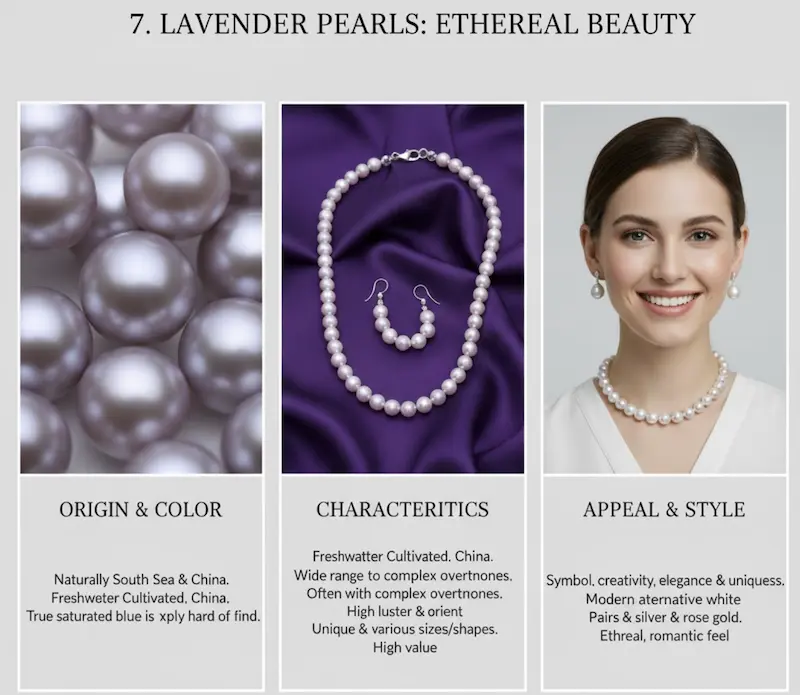
Lavender pearls frequently carry abundant overtones that give them a shifting, layered complexity of color. That distinctive tint makes them a favorite among collectors hunting for something beyond the usual pearl shades.
8. Purple Pearls: Royal Elegance
Purple pearls arrive in several shades, from grape all the way to a deep royal purple. Most of these striking gems are freshwater types, and they have won a real following among people who want jewelry that is bold and out of the ordinary.
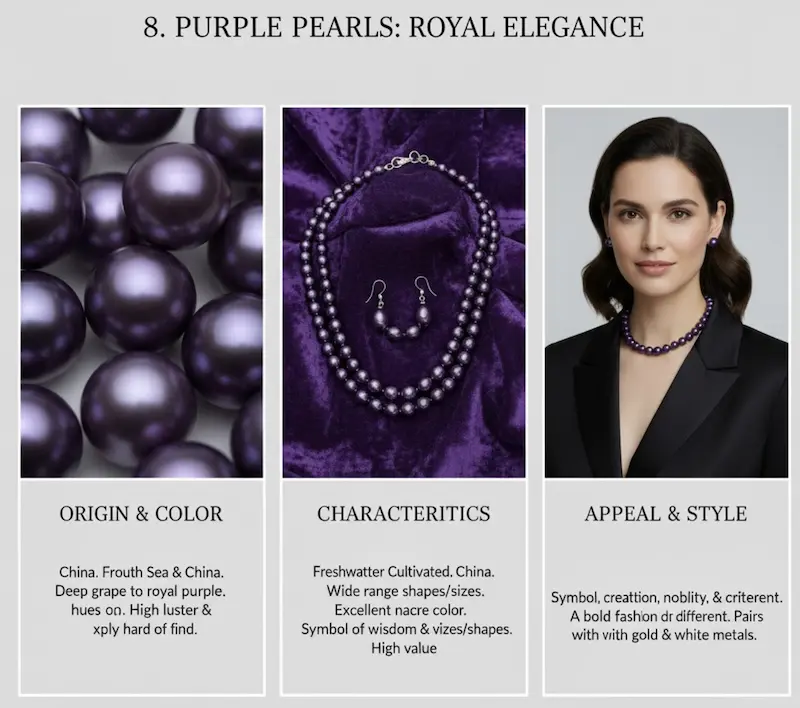
Purple pearls symbolize wisdom, nobility, and creativity. They double as genuine conversation starters and standout pieces.
Understanding Pearl Color Components
Three distinct elements combine to produce the finished look of pearls colors:
- Body Color: This is the pearl's dominant color and the very first thing your eye registers. It can land anywhere, white, black, gold, pink, blue, and every hue in between.
- Overtone: These are the tints you can see resting over the body color. A white pearl's surface might carry a whisper of pink, green, or silver. Research suggests overtones emerge from light diffracting where nacre crystals meet. Rose overtones on white Akoya pearls, for one, boost both their value and their appeal.
- Orient: This term describes the rainbow shimmer that seems to move and shift across a pearl's surface as it turns or as the light changes. Light rebounding off the many layers of nacre is what conjures that magical play of color.
No single pearl shows all three of these elements. Body color is universal, but overtone and orient may or may not appear. As a rule, a pearl that displays both overtone and orient is worth more than one carrying body color alone.
How to Choose the Perfect Pearl Color
Settling on a pearl color comes down to several personal considerations, including:
- Skin Tone Considerations: Those with cool skin tones, where the wrist veins look blue, tend to look wonderful in pure white, silver, or black pearls. Warmer skin tones with greenish veins often come alive in cream, golden, pink, or peach. Treat these as guidance, though, not rules, because your own preference always carries the most weight.
- Personal Style: Classic and traditional looks pair naturally with white or cream pearls. The more modern and daring among us may gravitate toward black or golden varieties, while pink and peach tones suit a romantic sensibility.
- Occasion: White pearls travel well across all sorts of events. Black pearls work for both everyday wear and special evenings. Golden pearls make wonderful gifts for graduations, promotions, and other milestones that celebrate achievement.
Price range: Pearls bought in bulk span a spectrum of prices depending on color. The white, pink, and peach freshwater varieties are a genuine bargain, whereas the black and gold Tahitian and South Sea pearls, being so rare and so large, carry premium prices.
Natural vs. Treated Pearls Colors
Before committing to a purchase, it pays to know whether a pearl's color is natural or has been altered.
Natural colors: Here the color develops on its own as the pearl grows, with nothing beyond the growth process shaping it. Tahitian black pearls, golden South Sea pearls, and most white South Sea pearls keep the color they were born with. These earn higher prices on the market.
Treated colors: A "treated" color is one applied after harvest, through methods like dyeing, bleaching, or even irradiation. A few of the more common approaches include:
- Black Akoya and black freshwater pearls are invariably dyed, since these shades never occur naturally in those pearl types
- The majority of white Akoya pearls go through bleaching and pinking treatments
- Deep golden South Sea pearls with an intense metallic sheen have frequently been color-enhanced
- Vivid blue, bright green, or cranberry-red freshwater pearls are usually dyed
Whenever you buy from wholesale pearls suppliers, make a point of asking about treatments. Trustworthy dealers are open about any color enhancement, which lets you decide with full knowledge.
The Value Factor: How Color Affects Price
Color certainly shapes what a pearl is worth, but it never acts alone. Size, luster, how clean the surface is, and shape all feed into the final figure as well. Color is one factor among several in setting a pearl's value, sitting alongside size, luster, surface quality, and shape, yet it does move the price.
- Priciest pearls colors: Natural golden tops the list as the costliest pearl hue. Peacock and South Sea Tahitian pearls usually command the highest prices thanks to their rarity, size, and powerful natural color. Premium white South Sea pearls likewise rank among the most valuable.
- Mid-range pearls colors: Standard white Akoya pearls, gray Tahitian pearls, and well-lustered white South Sea pearls fall into the mid-range, offering high quality at a more approachable price.
- Value pearls colors: Freshwater pearls in white, pink, peach, and lavender deliver the best value going. Top-grade freshwater pearls can rival saltwater ones for beauty while costing far less, and they hold up wonderfully to everyday wear.
Rarity weighs heavily on price. Truly blue blue pearls, for instance, can climb to considerable sums. Color consistency matters as well, since assembling a full strand means sourcing many gems of matching color, and that uniformity lifts the value of the whole piece.
FAQs
What is the rarest color of pearls?
Natural blue Australian South-Sea pearls, in silver- or steel-blue, are the scarcest of all.
What colors of pearls exist?
Pearls turn up in white, cream, gold, black, gray, silver, pistachio, aubergine, peacock green, lavender, pink, and every gradation in between.
Which color pearl is best?
"Best" is a matter of taste; classic white and rare natural gold carry the broadest prestige.
What color pearls are worth the most?
Deeply saturated natural gold South-Sea pearls and natural-color peacock green Tahitians command the highest prices per carat.
Conclusion: Your Perfect Pearl Awaits
With so many kinds of pearls out there, everyone can find one that suits both their taste and their budget. White, black, pink, and royal gold barely scratch the surface of the beautiful, meaningful pearls colors waiting to be discovered.
Knowing the many colors of pearls puts you in a position to choose wisely and with confidence, whether you are drawn to the timeless grace of white Akoya pearls, the exotic drama of black Tahitians, the warm shimmer of golden South Sea gems, or the tender romance of pink freshwater pearls.
Partner with skilled Pearl Manufacturer providers and sources you can rely on, and you can count on finding genuine gems built to last for years. Never forget that the "best" pearl color is simply the one that suits you and lifts your spirits.
Give yourself the time to explore the full sweep of pearls colors on offer today. Hold different shades against your skin, notice how each one makes you feel, and then follow your instinct. Pearls are deeply personal gems, and yours is out there somewhere within that beautiful spread of natural color.