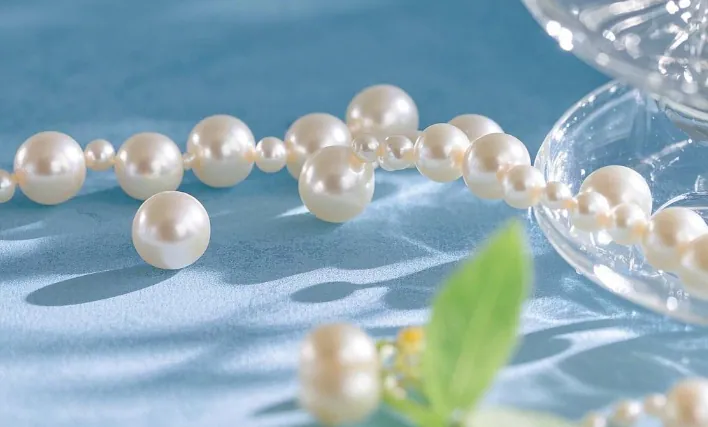



For generations, pearl necklaces have held a special place in the hearts of jewellery lovers. Their soft, luminous glow and timeless character make them one of the most treasured pieces anyone can own.
If you have ever wondered why two necklaces that look similar carry wildly different price tags, you are far from alone. The good news is that shopping for a pearl necklace does not have to feel overwhelming. It simply comes down to knowing which details to inspect.
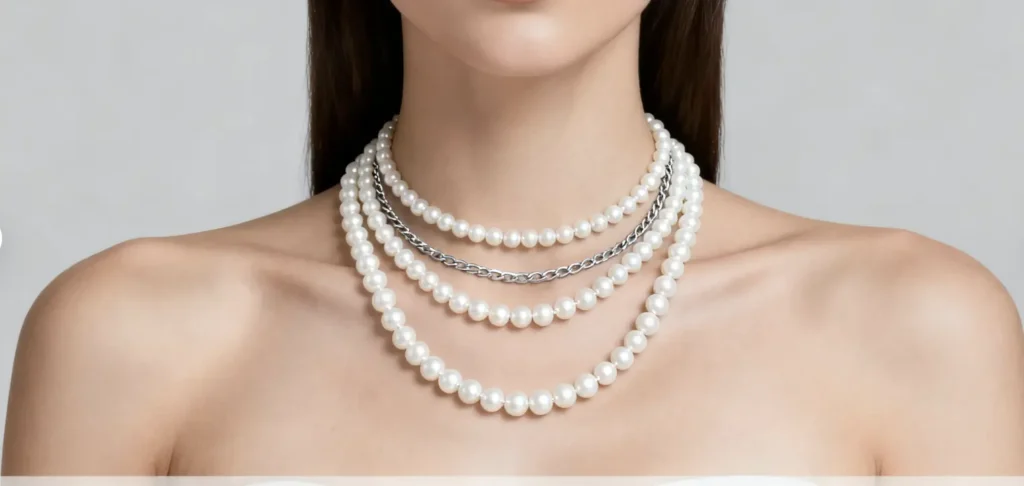
Whether this is your very first strand of pearl jewellery or the newest addition to a growing collection, the pages ahead cover everything worth knowing.
By the end, you will have the confidence to select a piece you will treasure for decades, understanding both what separates a fine pearl from an ordinary one and how to match length and type to your taste.
Understanding Pearl Types: Your First Decision
Before you give any thought to millimetres or overtones, get familiar with the main categories of pearls on offer. This groundwork shapes your budget expectations and the overall look you can hope to achieve, and it is one of the most important early steps in learning how to buy a pearl necklace.
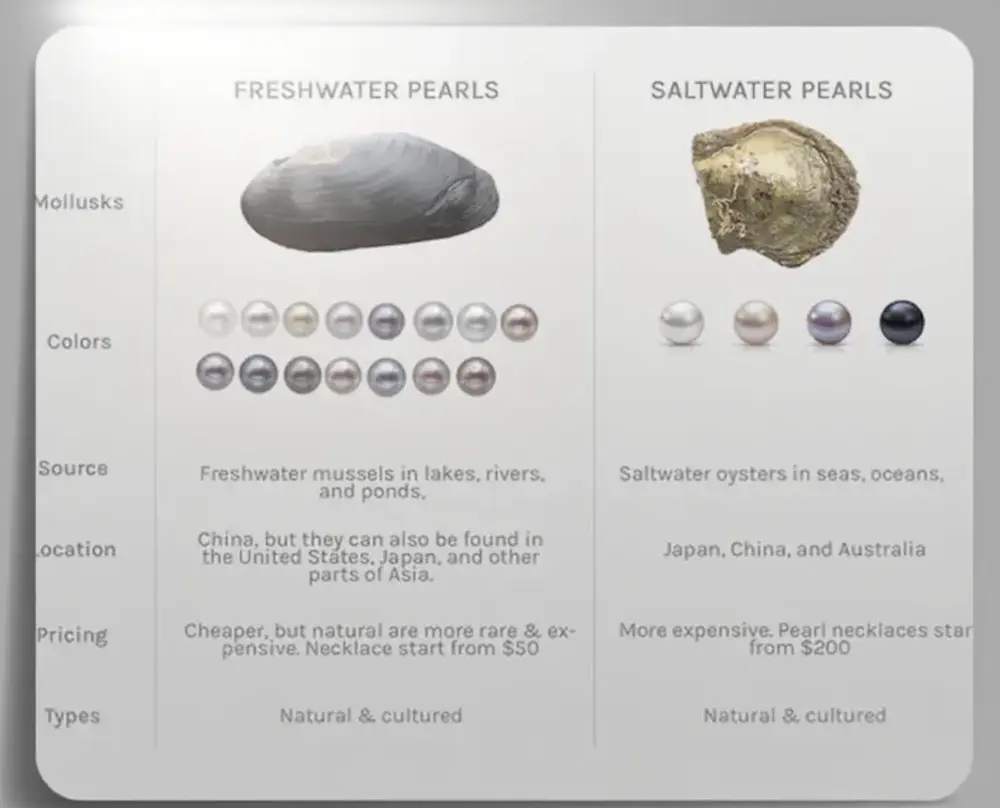
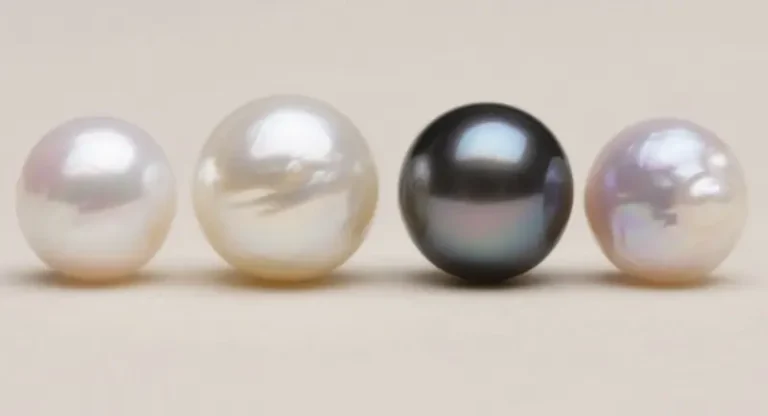
- Freshwater Pearls: Affordable Beauty: Freshwater pearls grow inside mussels raised in ponds, rivers, and lakes, and they are the variety you will encounter most often, so sourcing them is rarely a problem. Here is something remarkable: a single mussel can nurture several pearls at the same time. They arrive in lovely natural tones such as white, pink, lavender, and even soft peach. Although they can closely resemble their saltwater cousins, freshwater pearls typically carry a far gentler price. For anyone just beginning to explore pearl necklaces, they deliver outstanding value for the money spent.
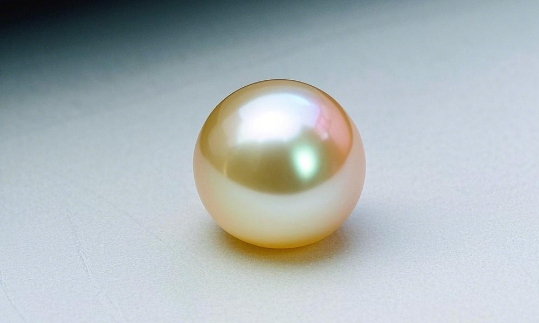
- Akoya Pearls: Classic Perfection: The image most people summon when they picture a traditional pearl necklace is the Akoya. Cultivated in saltwater and sourced largely from Japan and China, these pearls are celebrated for their brilliant shine and remarkably even, round form. Most fall between 6mm and 9mm and appear in white or creamy tones, frequently carrying delicate rose or silver overtones. They represent the height of timeless pearl refinement, though they command a higher price than freshwater varieties.
- South Sea and Tahitian Pearls: If you are after something genuinely rare and striking, South Sea and Tahitian pearls belong at the top of your list. South Sea pearls, harvested from the waters surrounding Australia, Indonesia, and the Philippines, rank among the largest cultured pearls of all, often stretching from 10mm to 15mm and sometimes beyond, in gorgeous shades of white, silver, and gold. Tahitian pearls, contrary to what the name suggests, are cultivated chiefly in French Polynesia and are prized for their rich, dark tones such as charcoal, peacock green, and aubergine.
The Seven Value Factors That Determine Quality
Recognising what elevates one pearl necklace above another is essential once you set out to make a purchase, and it sits at the core of how to buy a pearl necklace.
Diamonds follow a rigid grading system, but pearl assessment stays partly a matter of judgement. Even so, the same seven characteristics reliably shape a pearl's worth.
Factor #1: Luster – The Most Critical Factor
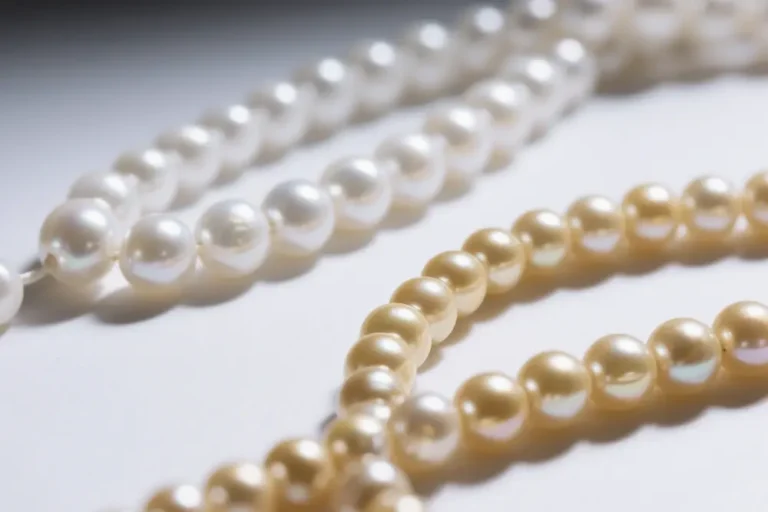
Luster describes how bright and crisp the light appears as it reflects off a pearl's surface, and it is what gives a fine pearl that lit-from-within radiance. As you assess a quality pearl, an essential part of learning how to buy a pearl necklace, you should notice a clean, sharp reflection almost like a mirror. Poor luster leaves a pearl looking flat and chalky instead. Try this simple check: raise the strand toward your face beneath good lighting. If your own features bounce back clearly, the luster is superb. Time and again, this single trait outweighs size when value is decided.
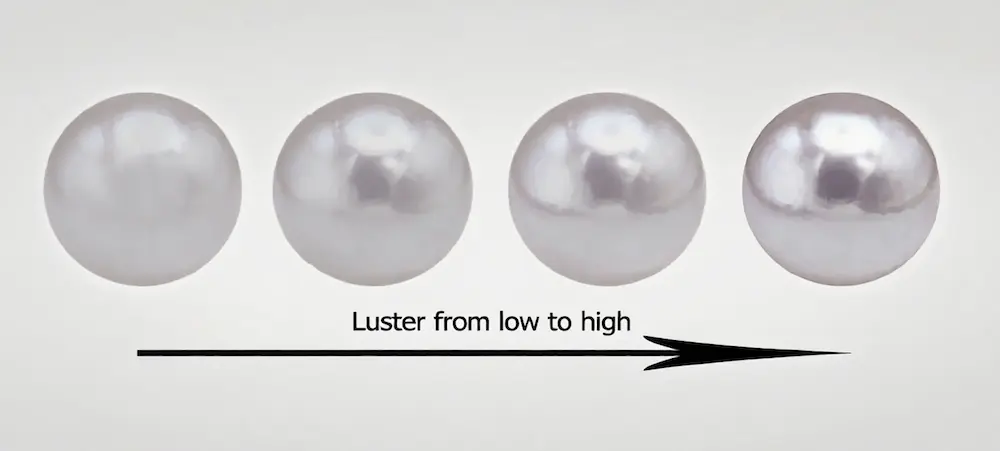
| Quality Grade | Luster Characteristics | What You’ll See |
|---|---|---|
| AAAAA/AAAA/AAA | Excellent to exceptional | Sharp, mirror-like reflections |
| AA | Very good | Good reflections with slight softness |
| A | Good | Softer reflections, some haze |
| B/C | Fair to poor | Chalky appearance, minimal reflection |
Factor #2: Surface Quality – Blemishes and Perfection
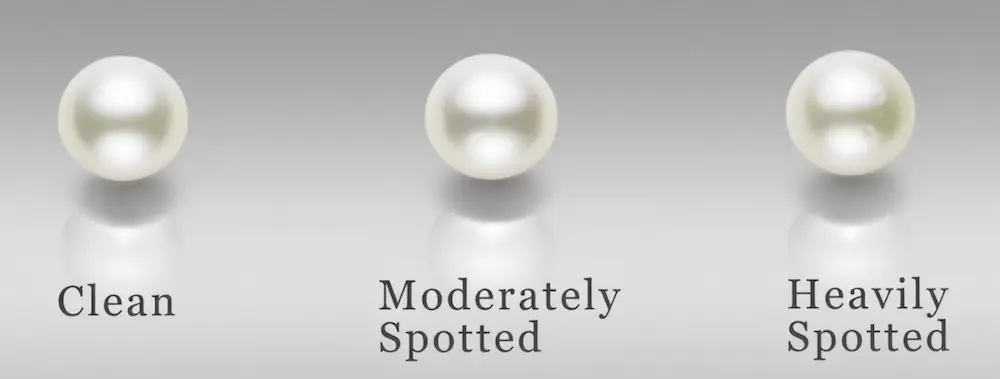
Because pearls are created by living creatures, nearly every natural pearl carries a few surface marks.
How much those marks matter, though, hinges on their number, their size, and how readily the eye catches them, a point worth holding onto as you consider how to buy a pearl necklace.
The finest pearls present clean surfaces with only minor spotting, bumps, or irregularities. To gauge the surface, hold the strand roughly a foot from your face under strong light. Do flaws jump out immediately, or must you narrow your eyes and hunt to find them at all?
Factor #3: Shape – Round, Baroque, and Everything Between
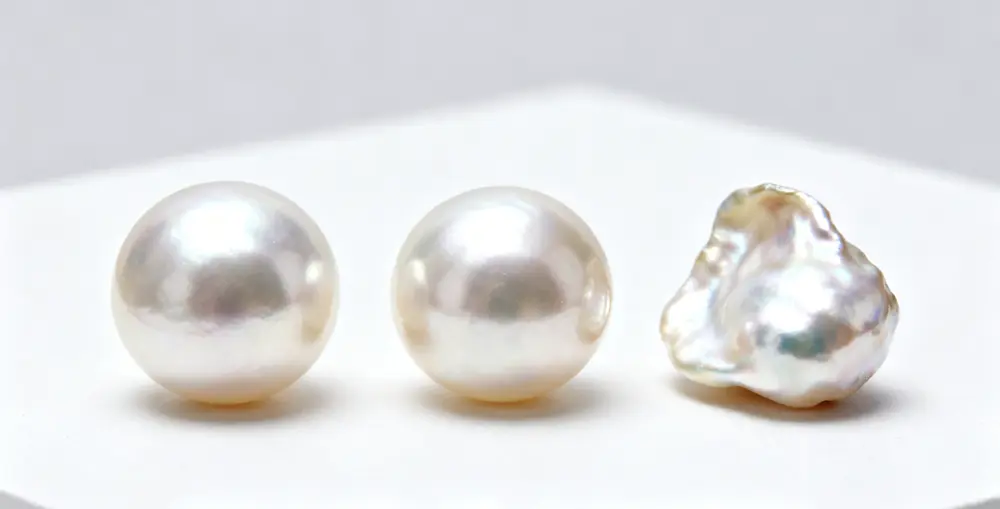
Flawlessly round pearls fetch the highest prices, yet beauty turns up in every shape imaginable.
Near-round pearls deliver terrific value while keeping that classic silhouette. Baroque pearls, with their delightfully irregular, organic forms, have surged in popularity across modern jewellery design.
Drop shapes look stunning in pendants and earrings. As you learn how to buy a pearl necklace, keep in mind that shape comes down to personal taste. A strand that is slightly off-round can cost noticeably less yet look almost identical once it is around your neck.
Factor #4: Size – Bigger Isn’t Always Better
Pearls are sized in millimetres, and as a rule, when every other trait is equal, larger pearls are scarcer and therefore pricier.
That said, and this matters greatly as you learn how to buy a pearl necklace, a smaller pearl with brilliant luster and a clean surface will always outshine a bigger pearl with weak qualities.
Plenty of Pearl Manufacturer specialists advise putting quality ahead of size. A luminous 7-8mm strand will consistently look finer than a lacklustre 9-10mm one.
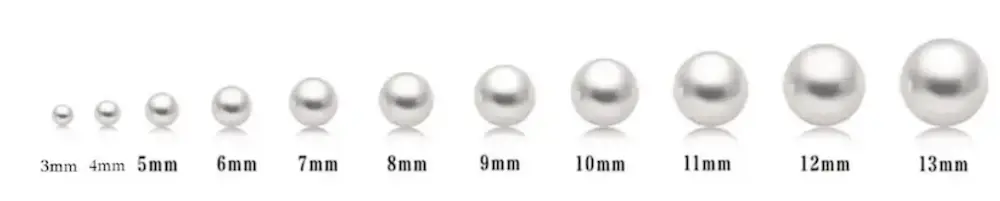
A few of the sizes you will run into most often:
- 6-7mm: Petite and ideal for a youthful or dainty look.
- 7-8mm: An excellent size for daily wear.
- 8-9mm: Timeless and eye-catching, they are sure to be noticed.
- 9-10mm and larger: A bold declaration of luxury.
Factor #5: Color – Personal Preference Meets Skin Tone
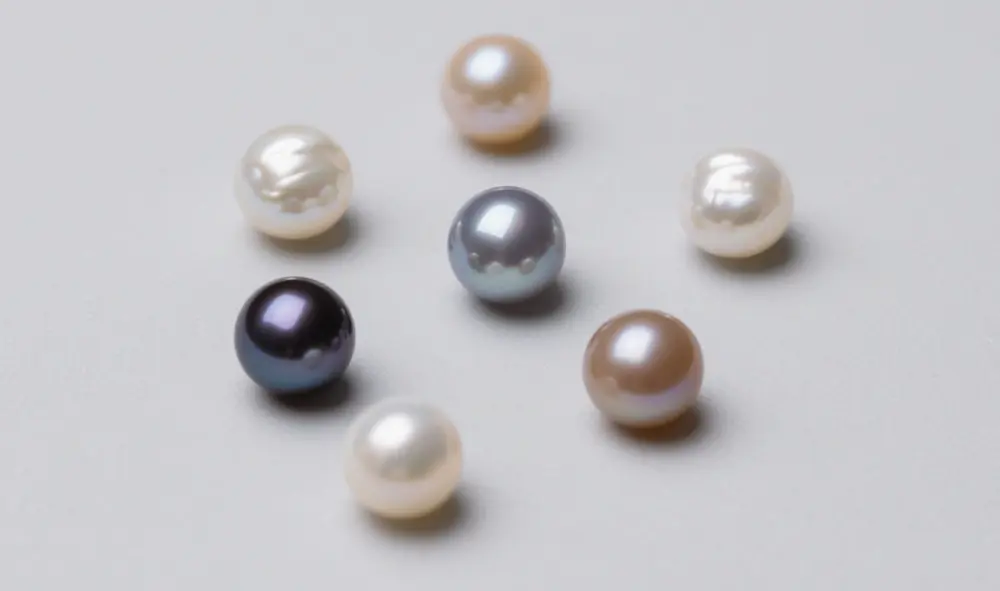
The palette of pearl colours is astonishing, running from white, cream, pink, and lavender to golden, black, and every hue between. No single colour is the best; it hinges entirely on what flatters your complexion and suits your style. As a rule, cooler skin tones look wonderful beside white pearls with rose or silver overtones, whereas warmer complexions come alive next to cream or golden pearls. While you browse for wholesale pearls, holding a few colours up to your face in daylight is a smart move when working out how to buy a pearl necklace.
Factor #6: Nacre Quality – The Heart of Durability
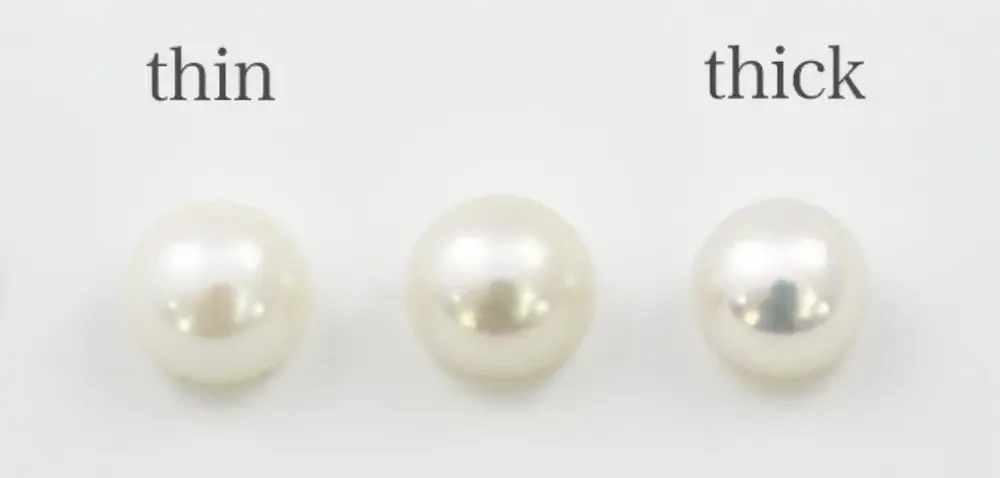
Nacre, the glossy substance that builds up around the pearl's core, governs both its beauty and its lifespan. Thicker nacre yields richer luster and pearls that endure, while thin nacre invites chipping, peeling, and fading luster as the years pass. According to the Gemological Institute of America, quality nacre reveals no sign of the nucleus beneath and carries excellent luster. When you inspect Akoya or other bead-nucleated pearls, a vital step for how to buy a pearl necklace, study the drill holes closely. If the bead nucleus is visible, the nacre may well be too thin.
Factor #7: Matching – Consistency Throughout the Strand
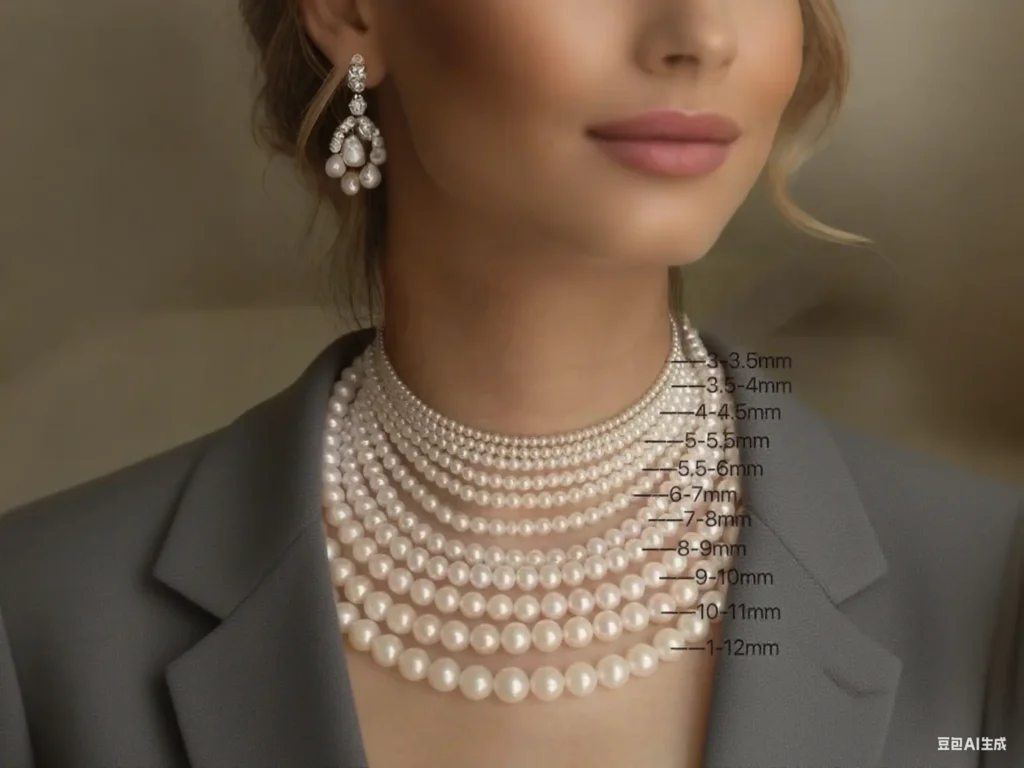
On a well-made strand, the pearls align in size, shape, colour, and shine all the way from clasp to clasp. Achieving that uniformity demands skill and patience, which is precisely why such strands cost more. Perfectly matched strands sit at the top of the price scale, yet graduated strands, where the pearls grow larger toward the centre, can be just as lovely and usually cost less, all useful things to weigh when figuring out how to buy a pearl necklace.
Choosing the Right Length for Your Style
Length transforms both how a necklace looks and how many ways you can wear it. As you work out how to buy a pearl necklace, factor in your build, your wardrobe, and your everyday routine.
A grasp of pricing lets you shop with assurance. Depending on type, quality, and size, pearl necklaces stretch from under $100 to well beyond $100,000.
Remember that, treated with a little care, what you buy can be handed down through the generations.
- 16-inch Choker: This sits snugly at the base of the neck. Wonderful for special evenings, it pairs beautifully with open collars and dresses, particularly off-the-shoulder styles, and generally suits those with longer necks.
- 18-inch Princess: The crowd favourite. Landing just under the collarbone, this adaptable length flatters nearly any outfit from casual to black-tie, and most jewellery specialists suggest beginning here.
- 20-inch Matinee: Falling to mid-chest, the 20-inch Matinee sits handsomely against higher necklines and tailored business attire, offering more drama than shorter options.
- 24-inch Opera: This length drapes gracefully below the bust and lends a refined touch to any ensemble. Wear it full-length or loop it twice for a layered effect.
- 30+ inch Rope: Wonderfully flexible. Let it hang long, coil it several times, or knot it to create a whole range of looks.
For most women, specialists tend to point to an 18-inch strand as an ideal place to start, since it pairs easily with a wide variety of outfits and figures. As your collection grows, you can always fold in other lengths, a practical thing to bear in mind for how to buy a pearl necklace.
Setting Your Budget: What to Expect
Knowing how pricing works lets you shop with confidence. Pearl necklaces run from under $100 to comfortably past $100,000, shaped by type, quality, and size.
Realistic Price Ranges
- Freshwater pearl strands (good quality, 7-8mm): $100-$500
- Akoya pearl strands (AA+ quality, 7-8mm): $300-$2,000
- South Sea pearl strands (10-12mm): $2,000-$15,000+
- Tahitian pearl strands (9-11mm): $1,500-$10,000+
Bear in mind that, with a little care, your purchase can be passed along for generations. A growing number of sellers now offer direct-to-consumer pricing, a handy route for how to buy a pearl necklace, which simply means they skip the middleman and the steep markups you would normally face in a traditional shop. The savings can be considerable, occasionally reaching as much as 80%.
As you set your budget for how to buy a pearl necklace, think about beginning with one truly fine strand instead of several lesser pieces. When it comes to pearl jewelry, quality outweighs quantity every time.
Where to Purchase: Trusted Sources Matter
The place you choose to buy your pearl necklace carries real weight, shaping both the quality you receive and the price you pay.
Happily, as you learn how to buy a pearl necklace, there is no shortage of reliable places to shop today.
Specialized Pearl Retailers
Retailers devoted entirely to pearls usually carry a broader range and possess deeper expertise. By working straight from the pearl farms and skipping the middleman, these specialists can hand you finer pearls at a keener price than a typical jewellery shop would. As you browse, note whether the store explains clearly how it grades quality, offers a straightforward return policy should you reconsider, and shares resources to help you understand pearls more broadly. Many reputable online pearl sellers now include certifications that confirm quality, show sharp, detailed photography, and post buyer reviews so you can shop with real confidence.
Jewelry Stores and Department Stores
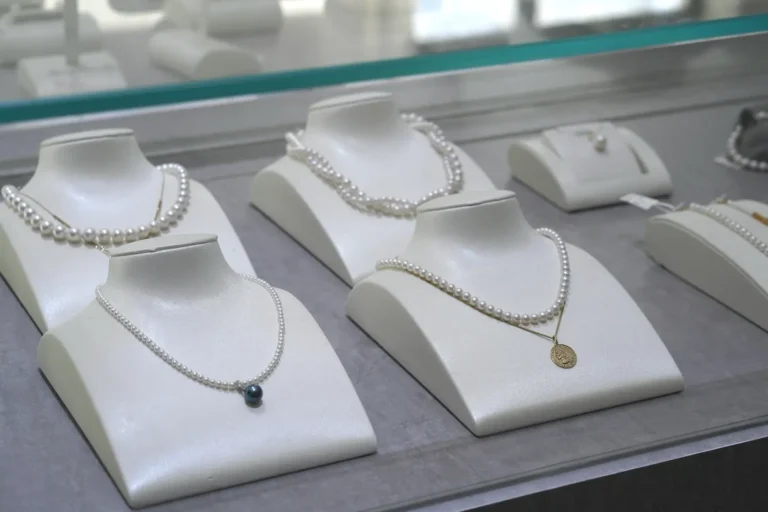
One clear advantage of a conventional jewellery store is the chance to see and handle the pearls in person before buying. Keep in mind, though, that their prices often carry a hefty markup. If you take this route for how to buy a pearl necklace, ask plenty of questions about the pearl type, its grade, and its origin, and be sure to weigh the in-store prices and selection against what is available online so you know you are getting a fair deal.
Considerations for Online Shopping
Buying pearls online keeps growing in popularity. Provided you stick to sellers you know and trust, it is generally a safe route. Look out for the following to be sure you are getting a worthy piece:
- Detailed Quality Grading: To describe pearl quality, a seller should rely on a transparent grading scale such as AAAAA, AAAA, AAA, AA, and so on.
- Good Photos: Expect an ample set of crisp, high-resolution images capturing the pearls from several angles.
- Simple Returns: Confirm they offer a fair return policy that lets you send the piece back if it disappoints.
- Happy Customers: Read through what past buyers have said, and seek out Expert Advice: favour sellers who share genuinely helpful information and clearly know pearls inside and out.
- Good Help: They should be easy to reach and quick to respond to your questions.
Many online shops selling pearl strands now feature tools that let you compare prices and virtually try on different styles. Being able to picture how a necklace will sit on you before buying makes the whole journey of learning how to buy a pearl necklace far smoother.
Caring for Your Investment
With your pearl necklace chosen and purchased, a little thoughtful care will keep it looking radiant for years to come.
- Daily Wear Guidelines: Pearls are organic gems, softer and more fragile than most other stones. Sitting at just 2.5-4.5 on the Mohs hardness scale, they scratch easily. Always slip your pearls on last, once cosmetics, perfume, and hairspray are all in place, since the chemicals in those products can erode nacre over time. By the same logic, take your pearls off first when you undress.
- Cleaning and Storage: The simplest habit is to wipe each strand with a soft, slightly dampened cloth once you take it off. That single step lifts away skin oils and residue and does more for longevity than almost anything else. Once every few months, treat them to a more thorough wash in lukewarm water with only the faintest trace of mild soap. What you must never reach for are ultrasonic units, steamers, or harsh chemical cleaners, since pearls simply cannot tolerate them.
Keep pearls in their own space, away from harder jewelry that can leave scratches. Skip fully sealed containers as well, because a little ambient humidity keeps the nacre from drying out and cracking. A soft fabric pouch or a fabric-lined box is ideal.
Restringing: The When and the Why
For a necklace that goes on regularly, plan to have it professionally restrung every one to two years. Silk gives over time, weakening and stretching, while grime quietly collects in the spaces between the beads. A good jeweler will tie a knot between every pearl during the process, and that detail matters twice over: a broken strand won't scatter and vanish, and neighboring pearls won't rub and abrade one another. It is one of the smartest upkeep habits to adopt once you understand how to buy a pearl necklace.
By now you've worked through the types, the quality factors, the length options, and the budget. What remains is to bring all of it together into the purchase that's right for you, which is the final step in learning how to buy a pearl necklace.
By now you've covered types, quality factors, lengths, and budgets. The last move is to pull those threads together into your ideal purchase, rounding out everything there is to learning How to buy a pearl necklace.
- The Comparison Process: Learning how to buy a pearl necklace is not a decision to rush. Set at least three strands within your price range side by side. View each one under a range of light sources, since ordinary daylight tends to reveal what showroom lighting can quietly flatter away. Snapping a few photos helps too, because a camera occasionally catches detail the naked eye glides right past.
- Trust Your Instincts: The technical checklist is real, but so is your gut reaction. Which strand lifts your mood? Which one would you keep reaching for? Pearls are meant to bring pleasure, both to wear and to look at, and if one particular strand pulls at you, that pull is worth listening to.
- Ask Questions Freely: Honest sellers never mind being asked. Good things to raise include:
Growing a Collection After That First Strand
Once you've mastered how to buy a pearl necklace and brought home your first one, don't be surprised if the urge to add more takes hold. For plenty of enthusiasts, gathering pearl jewelry turns into a genuine, lasting passion.
Consider branching out across pearl varieties and looks. With a classic white freshwater or Akoya strand already in hand, colored pearls or unusually shaped ones make a natural next step. A spread of lengths opens up more ways to wear them, and stacking strands of varying lengths creates a fresh, contemporary effect.
Pearl jewelry makes a wonderful gift at any stage of life. Pieces like these carry stories and memories, passing from one generation to the next as heirlooms that tie past, present, and future together, which is part of why deciding how to buy a pearl necklace carries real weight.
Final Thoughts
Once the fundamentals of how to buy a pearl necklace are clear, choosing becomes something you can do with real confidence. Remember that no two people define the perfect strand the same way; how you plan to wear it, what your budget allows, and the style you gravitate toward all shape the answer. Don't fixate on pearl size alone, but weigh luster and surface smoothness just as heavily. Pick a length that suits your wardrobe and daily routine, and buy from a seller you trust who genuinely stands behind what they offer.
More than anything, pick pearls that truly delight you. For thousands of years people have treasured and worn these lovely gems.
You're now equipped to choose a piece you'll cherish for years to come. Whether you're drawn to the understated charm of affordable freshwater pearls or the deep, luxurious presence of South Sea pearls, your necklace will stand out as something all its own.
The world of pearls is rich and endlessly varied. Move at your own pace, lean on what you've learned, and savor the hunt for the strand that fits you. Choosing pearl jewelry ought to be every bit as enjoyable as wearing it.
FAQs
How much should you pay for a pearl necklace?
Prices span an enormous range, from under $100 for small, lower-grade freshwater pearls all the way to tens of thousands for large, top-quality South Sea or natural pearls. What you pay comes down to the type, the size, and the overall quality, meaning luster and surface.
What are the rules for wearing pearls?
Today's conventions are relaxed, but classic etiquette offers a few pointers: put pearls on last and take them off first so they steer clear of perfume and other chemicals, wear them regularly since the oils from your skin help keep the luster alive, and treat them as fair game for both daytime and evening now.
Are Costco pearls good quality?
For mid-range cultured pearls, often Akoya or freshwater, Costco tends to deliver solid value. You won't find the very top collector-grade pieces there, but the strands they stock are usually dependable and decent, commonly graded somewhere in the AA to AAA band.
Which is better, AA or AAA pearls?
AAA is the higher grade of the two.