



You don't need a gemology degree to read the value of a freshwater pearl, but the difference in knowing costs real money. Working alongside a pearl manufacturer such as Zhihang Jewelry taught me quickly that the gap between a $50 pearl and a $5,000 one has nothing to do with insider secrets. It comes down to seven measurable traits, and every one of them is something a buyer can learn to spot.
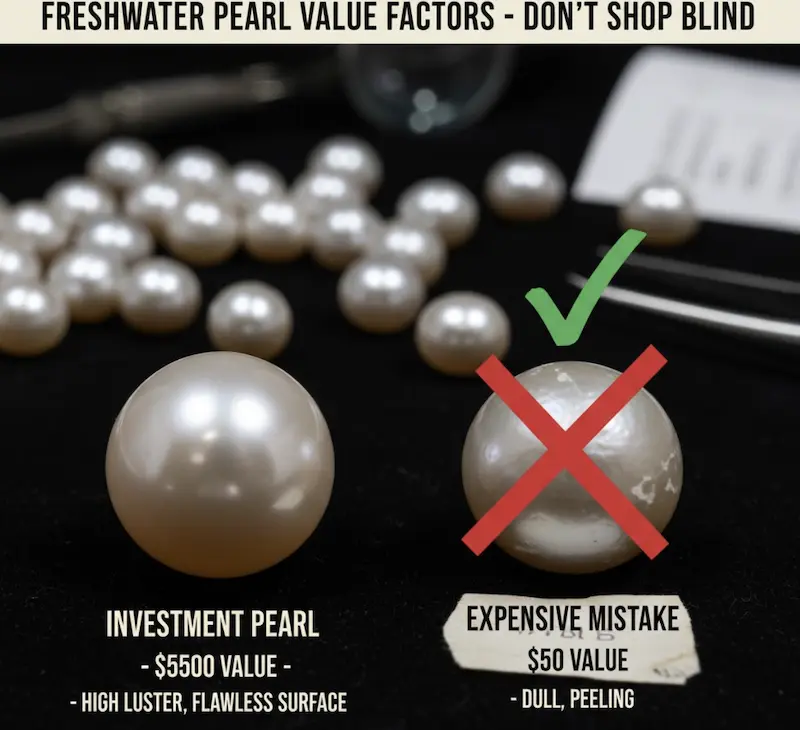
The problem is that most shoppers buy on instinct. A pearl catches the light, the color feels right, and the sale is done in seconds. Half a year later they're asking why their supposed heirloom looks flat, or why the surface has begun to flake. Freshwater pearl value factors don't act in isolation; they behave more like ingredients in a dish, each depending on the others. Overlook a single crucial one and the whole purchase turns into a costly lesson.
How Freshwater Pearls Differ from Other Pearl Types
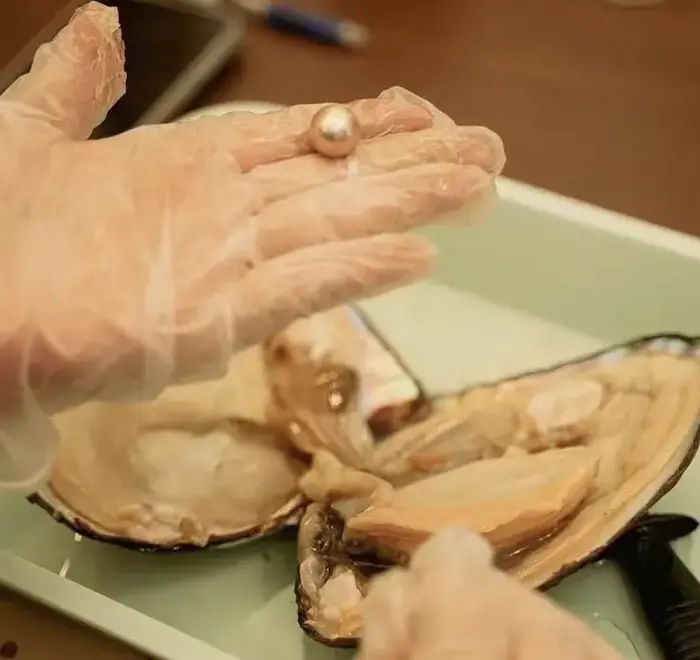
It helps to define exactly what these gems are before breaking down the individual value factors. Freshwater pearls grow inside mussels rather than oysters, cultivated in the rivers, lakes, and ponds found largely throughout China. Where saltwater pearls rely on an implanted bead, freshwater pearls are tissue-nucleated, which leaves them made up of nacre almost entirely.
That structural difference feeds straight into value. A saltwater pearl wraps its bead core in a layer of nacre, and a thin layer spells trouble down the line. Freshwater pearls carry no such weakness; being solid nacre makes them tougher and lends them their characteristic soft, satin glow.
Now the picture gets more interesting. A single freshwater mussel can yield anywhere from 30 to 50 pearls per cycle, while a saltwater oyster manages only 1 or 2. The result is enormous supply, and that supply pushes prices well below saltwater levels. Buyers benefit hugely from this, yet the abundance is precisely why you need a sharp eye for quality to separate the standouts from the ordinary.
The 7 Core Freshwater Pearl Value Factors You Must Know
Quality Indicator #1: Luster – The Non-Negotiable Quality Factor
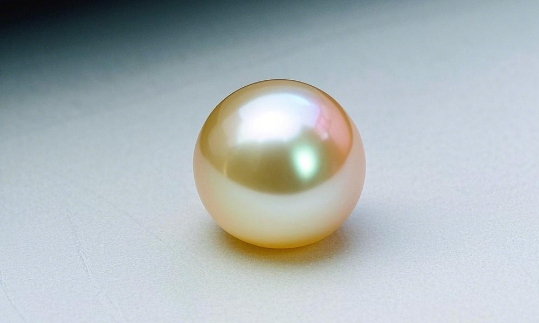
Luster is essentially the pearl's glow: the way light strikes the nacre layers and refracts back to your eye. Try this at a mirror with a pearl in hand. Is your reflection crisp and detailed on its surface? Then the luster is excellent. If the image is soft and the surface reads as dull, you're holding lower quality.
No single trait carries more weight than luster, which drives close to 40% of a pearl's value on its own. Graders rate it on a scale from Excellent down to Poor across five steps. With freshwater pearls the target is that satiny brightness; it won't reach the mirror-hard finish of an Akoya, but it should sit well clear of a chalky, lifeless look.
The finest AAAAA-grade wholesale pearls carried by houses like Zhihang Jewelry show "Excellent" luster, throwing back light sources as sharp, mirror-like reflections with next to no haze. AAAA grade rates "Very High to Excellent," softening only slightly at the edges. AAA grade steps down to "High to Very High." Once you drop under AA, the surface begins to take on that flat, unappealing matte tone.
A fast field test: hold the pearl about 6 inches from your face in daylight. If your features come through clearly on its surface, you're at AAA quality or above. If all you see is a fuzzy shape, put it back.
Quality Indicator #2: Size – When Bigger Actually Means Better Value
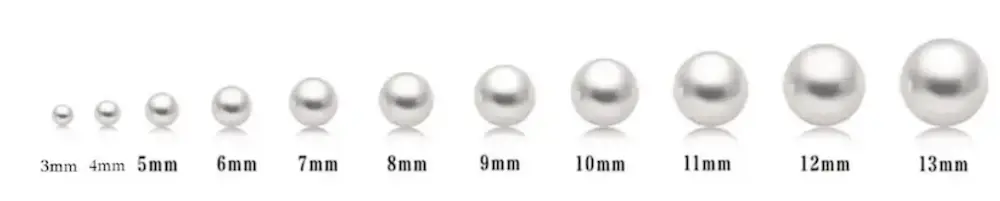
Every B2B buyer should have this size guide committed to memory:
- 2-6mm: Small, typically commercial grade
- 6-7mm: Entry-level quality, most abundant
- 7-9mm: Sweet spot for quality and value
- 9-12mm: Premium territory, exponential price jumps
- 12mm+: Rare, collector-grade pieces
What makes size such a distinctive value factor is how steeply the price climbs. A 7mm pearl might run $3 apiece at wholesale. Match every other quality trait but bump it to 8mm, and the figure could be $7. Reach 10mm and suddenly you're paying $40-80 per pearl. The reason is simple: bigger pearls demand far longer growing periods, and only 2-3% of any harvest ever reaches those dimensions.
Quality Indicator #3: Shape – The Rarity Premium
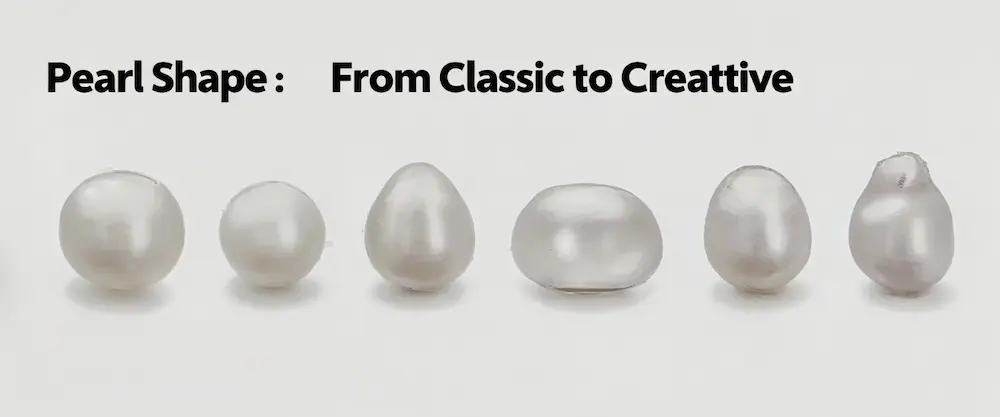
Truly round pearls fetch steep prices precisely because nature rarely delivers them; fewer than 3% of a freshwater harvest comes out as genuine rounds. The value ladder runs like this:
- Round: Most valuable (0–5% difference from a perfect sphere)
- Near-round: Strong second place (5 to 10 percent difference)
- Oval/Button: Value in the middle
- Baroque: Worth depends on how it looks
- Irregular: Lowest value for business
Of all the value factors, none opens up wider price gaps than shape. Two pearls that are identical on every other measure can differ by 300-500% based on roundness alone. A flawlessly round 9mm pearl wholesales near $80; take the same size, color, and luster in an oval and you might see $25.
Quality Indicator #4: Surface Quality – The Blemish Factor
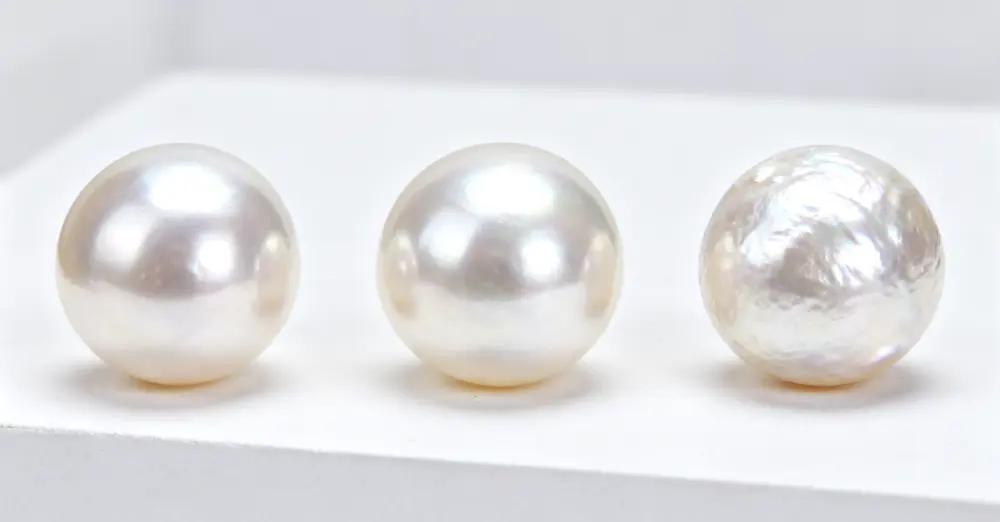
Surface quality is what a close look reveals: scratches, bumps, patches of discoloration, tiny wrinkles. Grading it comes down to the share of the surface that stays clean:
- AAAAA: 99-100% blemish-free (virtually flawless)
- AAAA: 95-99% clean
- AAA: 90-95% clean
- AA: 80-90% clean
- A: 60-80% clean
Here's the part insiders know: where a flaw sits counts for as much as how many there are. One obvious mark on the face of the pearl drags value down harder than three tucked away on the back. It's exactly why Pearl Manufacturer workshops take care to orient each pearl thoughtfully when drilling and setting.
Quality Indicator #5: Color – Market Demand Drives Value
Left to nature, freshwater pearls appear in white, cream, pink, peach, and lavender, while treatment can add blacks, metallics, and bold hues. Of all the value factors, color behaves less predictably than most people assume.
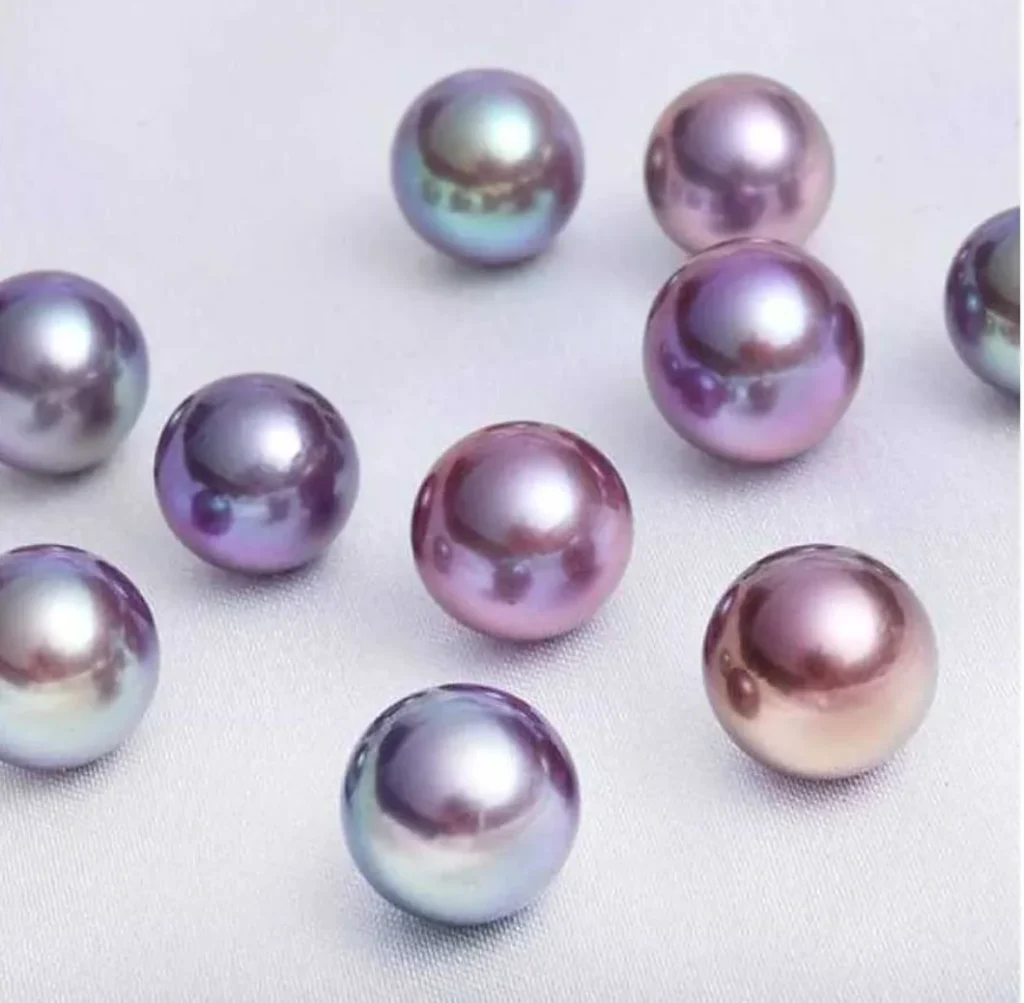
Natural color hierarchy (untreated):
- White with rose overtone: Classic, highest consistent demand
- Natural peacock/metallic: Extremely rare, premium pricing
- Lavender/pink: Mid-tier, fashion-dependent
- Cream/golden: Traditional, steady value
- Off-colors: Lowest value
The catch is that treated colors can outsell natural ones whenever fashion favors them. Dyed black freshwater pearls flew off shelves for three straight years on the back of a style trend. The crucial caveat: treated color tends to fade or shift over time, which chips away at long-term worth.
Quality Indicator #6: Nacre Thickness – The Durability Factor
As noted earlier, freshwater pearls are basically solid nacre, and that's their built-in edge. Saltwater pearls have to meet minimum nacre-thickness rules (0.4mm for quality grades). Being tissue-nucleated, freshwater pearls sidestep that weak point entirely.
Even so, the quality of that nacre remains one of the value factors that can't be ignored. Poor nacre gives itself away through:
- Chalky appearance
- Thin spots with visible discoloration
- Rough texture
- Low durability
Nacre that is thick and laid down evenly is what produces real depth of luster; it lets light sink in and bounce back out to create that coveted glow. You can't scan freshwater pearls for nacre thickness the way an x-ray reveals it in saltwater types, but the eye tells you plenty. A dull look, or a visible nucleus in the rare bead-nucleated freshwater varieties, points to weak nacre.
Quality Indicator #7: Matching – The Jewelry Premium
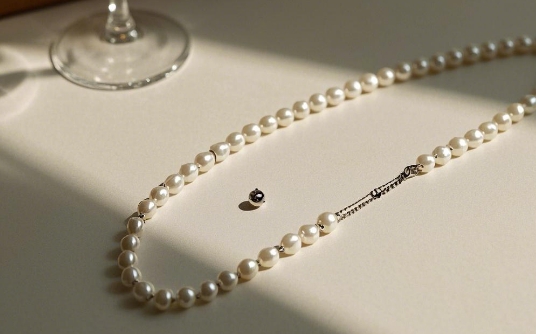
Matching only comes into play once you're assembling sets, whether necklaces, bracelets, or earrings, and it's among the most overlooked value factors in the B2B trade. Building a truly uniform 18-inch strand can mean combing through thousands of pearls.
Premium matching criteria:
- Size variation within 0.5mm
- Identical color and overtone
- Consistent luster across all pearls
- Similar surface quality
- Shape consistency
A tightly matched AAA-quality 18-inch freshwater strand may wholesale in the $400-600 range. The same pearls left unmatched, quality for quality? Perhaps $150-200 all told. That matching premium can double or even triple the price, which makes it one of the most rewarding value factors a buyer can learn to work.
Grading Systems: Understanding AAAAA to A Quality Levels
Across the trade, freshwater pearls are assessed on the A-to-AAAAA scale. At Zhihang Jewelry, as with most wholesale pearls suppliers, we rely on this five-tier structure because it draws clear lines across the full range of quality.
AAAAA Grade (Top 0.5-1% of harvest)
- Luster: Excellent, mirror-like reflections with exceptional brilliance
- Surface: 99-100% clean, virtually flawless to the naked eye
- Shape: Perfect round (within 2% of perfect sphere)
- Nacre: Premium thickness, absolutely even distribution
- Typical B2B wholesale: $120-250 per pearl (8-10mm)
These are exhibition-caliber pearls, standing shoulder to shoulder with fine Akoya saltwater pearls on looks alone. Pulling together matched sets at this level can take months of sifting through harvest after harvest.
AAAA Grade (Top 2-3% of harvest)
- Luster: Very high to excellent, sharp reflections with minimal hazing
- Surface: 95-99% clean, minor surface characteristics barely visible
- Shape: Round to near-round (within 5% of perfect sphere)
- Nacre: Thick, even distribution with excellent quality
- Typical B2B wholesale: $60-140 per pearl (8-10mm)
This grade is where serious jewelry begins. AAAA freshwater pearls go head to head with mid-range saltwater types at a fraction of the price, and most high-end freshwater pieces treat this level as their floor.
AAA Grade (the top 8–12% of the harvest)
- Luster: High to extremely high, with clear reflections and a little bit of edge hazing
- Surface: 90–95% clean, with a few little marks that aren’t very noticeable
- Shape: Almost round to a little oval (5–10% variation)
- Nacre: Good thickness with small differences
- Typical B2B wholesale: For 8–10 mm pearls, wholesale prices generally land between $25 and $70.
For retail jewelry, AAA is where most brands land, and for good reason. Pearls at this level read as genuinely attractive to shoppers, hold up beautifully under camera flash, and keep looking good year after year. That mix of consumer appeal and healthy margins is exactly why so many thriving retail lines treat AAA as their entry-level standard.
AA Grade (Top 25-30% of harvest)
- Luster: Good to high, though reflections soften and blur at the edges
- Surface: Roughly 80–90% clean, with noticeable spots distributed fairly evenly
- Shape: A mix, ranging from off-round and oval buttons to noticeably rounder pieces
- Nacre: Adequate thickness overall, but consistency of quality shifts from pearl to pearl
- Typical B2B wholesale: expect roughly $8–28 per pearl in the 8–10mm range.
AA is the grade built for high-volume, widely sold pieces. It suits fashion jewelry, promotional gifts, and any buyer trying to keep costs down. These are authentic pearls with real appeal, just short of the polish you get from the grades above them.
A Grade (Remaining harvest)
- Luster: Fair to moderate, with plenty of haze and flat, lifeless patches
- Surface: Roughly 60-80% clean, marked by clear blemishes and irregularities
- Shape: Irregular, baroque, and heavily off-round
- Nacre: Inconsistent, with some areas that may run thin
- Typical B2B wholesale: $1-10 per pearl (8-10mm)
A grade pearls have a real place in certain niches, whether that's craft work, everyday jewelry, or pieces that lean on baroque shapes for their character. Plenty of designers actively hunt down A grade baroques for contemporary work, treating the irregularities as a deliberate design element rather than a flaw.
How Freshwater Pearl Value Factors Compare to Saltwater Pearls
| Factor | Freshwater | Akoya (Saltwater) | South Sea (Saltwater) |
|---|---|---|---|
| Typical Size | 2-12mm | 2-10mm | 9-20mm |
| Luster Type | Soft, satin-like | Sharp, mirror-like | Deep satin glow |
| Price Range (AAAA) | $60-140/pearl | $150-600/pearl | $500-5000/pearl |
| Nacre | 100% nacre | 0.4-1mm over nucleus | 2-4mm over nucleus |
| Cultivation Time | 1-2 years | 10-18 months | 2-4 years |
| Harvest Volume | 30-50 per mussel | 1-2 per oyster | 1 per oyster |
| Grade System | AAAAA to A | AAA to A | A to D |
This comparison is exactly why the individual freshwater pearl value factors deserve close attention. Freshwater pearls sit in a market slot all their own: cheap enough to move in volume, yet able to reach saltwater-level quality at the top of the range. The best freshwater pearls Freshwater pearls from quality sources can match the look of Akoya for just 20-30% of the price.
Common Value Mistakes That Cost Thousands
Mistake #1: Confusing Size with Quality
This one comes up over and over. Buyers get locked onto landing “the biggest pearl” and lose sight of every other freshwater pearl value factor. A 12mm AA grade pearl may look striking in a photo, but hold it in your hand and the luster falls flat. Set that against an 8mm AAAA grade pearl at half the cost and twice the beauty, and the point makes itself.
The remedy is simple: lock in a quality floor first (AAA at minimum for retail, AAAA or AAAAA for luxury), and only then chase the largest size your budget allows.
Mistake #2: Ignoring Shape in Non-Round Applications
For a classic strand, round pearls are simply non-negotiable. But the moment you move into modern work such as drops, pendants, and baroque pieces, being flexible on shape opens up serious value. In those settings, near-round AAAA pearls bought at a 40% discount can look indistinguishable from flawless rounds.
Mistake #3: Treating All “White” Pearls as Equal
Both body color and overtone come into play. A white pearl carrying a rose overtone can run 20-40% higher than a plain white or cream-toned equivalent, with silver overtone landing somewhere between. This is one of the freshwater pearl value factors that quietly divides the experts from the novices.
Mistake #4: Buying Without Certification at High Price Points
Once you're looking at single pearls above $200 or strands above $1,000, a certificate from GIA or another respected lab is what safeguards your money. It records all seven freshwater pearl value factors to a professional standard and gives you paperwork that supports future resale. When AAAAA grade is on the table, skipping certification isn't an option.
Market Pricing Reality Check
Now for the hard numbers. Pricing in the pearl trade is notoriously murky, which is precisely why a firm grasp of freshwater pearl value factors gives you real leverage at the negotiating table.
Retail Markup Reality:
- Jewelry stores: 300-800% over wholesale cost
- Online direct retailers: 150-300% markup
- Direct from Pearl Manufacturer: Wholesale + 20-40%
Current Wholesale Markets (November 2025):
AAAAA Grade Freshwater:
- 7-8mm round: $80-120 per pearl
- 8-9mm round: $130-200 per pearl
- 9-10mm round: $220-350 per pearl
- 10-11mm round: $400-650 per pearl
AAAA Grade Freshwater:
- 7-8mm round: $35-65 per pearl
- 8-9mm round: $70-110 per pearl
- 9-10mm round: $120-190 per pearl
- 10-11mm round: $210-360 per pearl
AAA Grade Freshwater:
- 7-8mm round: $15-30 per pearl
- 8-9mm round: $28-50 per pearl
- 9-10mm round: $50-85 per pearl
- 10-11mm round: $95-160 per pearl
AA Grade Freshwater:
- 7-8mm round: $5-12 per pearl
- 8-9mm round: $10-20 per pearl
- 9-10mm round: $18-35 per pearl
- 10-11mm round: $38-70 per pearl
The figures above track what's happening right now across the major pearl trading hubs. Keep in mind that freshwater pearl value factors never act alone, so each of these numbers assumes white to near-white color paired with the surface quality you'd expect at that grade.
FAQs: Everything Else About Freshwater Pearl Value
Q: Do freshwater pearls increase in value over time?
Usually not. Cultured freshwater pearls are farmed on an ongoing basis, so they lack the scarcity that drives up rare natural pearls. That said, AAAAA and AAAA grade pieces from trustworthy sources tend to hold their worth. If you're buying with resale in mind, stick to the top 1% of quality, which typically recovers 70-90% of the original price on the secondary market.
Q: How do treated pearls compare in value to natural color?
At wholesale, treated pearls generally fetch 30-60% below their natural-color counterparts. A retail markup can mask that gap, but savvy buyers understand that dyed or irradiated pearls carry limited long-term worth. When it comes to freshwater pearl value factors, keeping the color natural is what protects an investment piece.
Q: What’s the difference between freshwater and natural river pearls?
Commercially speaking, truly “natural” freshwater pearls formed in wild mussels have all but vanished. Almost everything on the market today is cultured freshwater, still authentic and still 100% nacre, but grown by design rather than by chance. Genuine natural river pearls, thanks to their extreme scarcity, can command anywhere from $500 to $5,000+ each.
Q: Can you negotiate prices based on understanding value factors?
Without a doubt. Buying from a Pearl Manufacturer or wholesale pearls supplier goes much better when you can show real fluency in grading standards and freshwater pearl value factors. We've watched knowledgeable buyers lock in 15-25% better pricing simply because they knew the vocabulary.
Q: How do I verify the grade I’m being sold?
Ask for the paperwork. Any reputable supplier can hand over grading details on each lot. For larger orders, an independent certificate from GIA or Pearl Science Laboratory runs $50-150 per item and confirms every freshwater pearl value factor to a professional standard. On AAAA or AAAAA grade buys above $1,000, that cost pays for itself.
Q: Do oversized baroque freshwater pearls hold real value?
These belong to a market of their own. Sizable baroques of 12mm and up, when they pair an eye-catching silhouette with strong luster, can fetch anywhere from $40 to $100 apiece in the designer jewelry world. Here the worth is driven by one-of-a-kind character rather than the usual grading scale. For pieces like these, visual appeal outweighs the conventional freshwater pearl value factors.
Final Thoughts: Putting This Knowledge to Work in Real Purchases
Grasping the freshwater pearl value factors shifts you from someone who accepts whatever price is quoted to a buyer who knows exactly what they're looking at. At Zhihang Jewelry we watch this play out constantly, with a clear gap between clients who understand the material and those who don't. The knowledgeable ones secure sharper pricing, a better pick of the goods, and pieces they remain pleased with half a decade down the line.
There's genuine value waiting in the freshwater pearl market, but only for buyers who know what's in front of them. Now that's you. These seven freshwater pearl value factors hand you a framework to size up any pearl, push for a fairer price, and stock inventory that genuinely moves.
None of these fundamentals shift, whether you're sourcing freshwater pearls to resell, building your own designs, or simply buying for yourself. Quality isn't a matter of opinion. Value is something you can measure. Armed with this, you're equipped to make sound decisions in a corner of the jewelry trade that most people never really figure out.
The Gemological Institute of America covers a great deal of the technical ground on grading and judging freshwater pearl quality. The International Gem Society adds detailed scientific research into how pearls form and what sets them apart, which rounds out these practical points on value.